

























































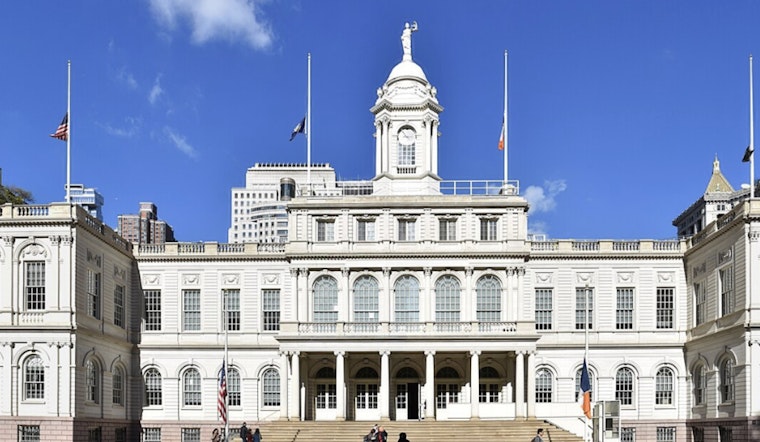
New York City's quietest political battleground might soon be your neighborhood community board. A new City Council bill would let council members directly appoint up to half of each board’s 50 volunteer seats, taking final say on many appointments away from borough presidents and putting the question to voters in a future referendum.
The measure, drafted as a change to the New York City Charter, has already drawn an unusual mix of bipartisan supporters along with early pushback from borough presidents' offices that see their authority on the line.
Int. 0322-2026, filed this year by Staten Island Councilmember Frank Morano, would rewrite charter language so that “one-half of the members” of every community board are appointed “by the council members elected from council districts” instead of being limited to nominees, according to the Council’s Legistar. The filing lists 14 Council sponsors, including David M. Carr, Nantasha M. Williams and Susan Zhuang, and shows the bill was sent to the Committee on Governmental Operations on Jan. 29. If the Council passes it, the change would still need sign off from voters in a citywide referendum.
Morano has pitched the shake-up as a basic fairness fix. As reported by amNY, he argued the move would be “fairer to New Yorkers” and would give council members a stronger voice in shaping neighborhood advisory bodies. Backers say council members are often the officials most in the weeds with residents’ day-to-day concerns, so they should have a direct hand in choosing who sits on the boards that weigh in on everything from liquor licenses to land use.
What the bill would change
Right now, borough presidents appoint half of each community board’s members, while council members nominate the other half and sit as nonvoting members. Int. 0322-2026 would flip those nominations into real appointment power and require that each council member’s share of appointees be proportional to the portion of the community district’s population they represent, according to intro.nyc.
The proposal keeps the existing cap of 50 members per board and preserves current restrictions, including the ban on appointing employees of borough presidents or City Council members.
Reaction and concerns
Borough presidents are not exactly eager to hand over the keys. Their offices have stressed the behind-the-scenes work they do in recruiting, screening and training community board members. In joint testimony to the Council, the five borough presidents laid out the support their offices provide and urged careful study before any shift in appointment powers, according to the Brooklyn borough president’s office.
Good-government groups and some former borough presidents warn the move could drag more bare-knuckle politics into boards that were supposed to become more transparent and representative in recent years. City & State reported that former Manhattan borough president Scott Stringer said he understands what the Council is trying to do, but worries it could weaken the screening and diversity safeguards earlier borough presidents put in place.
How it would reach the ballot
Because the bill is written as a charter amendment, it cannot take effect with a simple Council vote. It has to go to the people. The legislation states that the local law “takes effect immediately upon certification that it has been approved by the electors at the next general election succeeding its enactment,” according to Legistar. In practical terms, if the Council signs off this year, New Yorkers would likely see the question on the November ballot.
Supporters say that would make community board appointments more directly accountable to voters through their council members. Critics counter that it risks importing City Hall power plays into the most hyper-local level of government. For now, the bill sits in committee, and elected officials, civic organizations and borough presidents are bracing for hearings and potential amendments, as amNY reports.





