

























































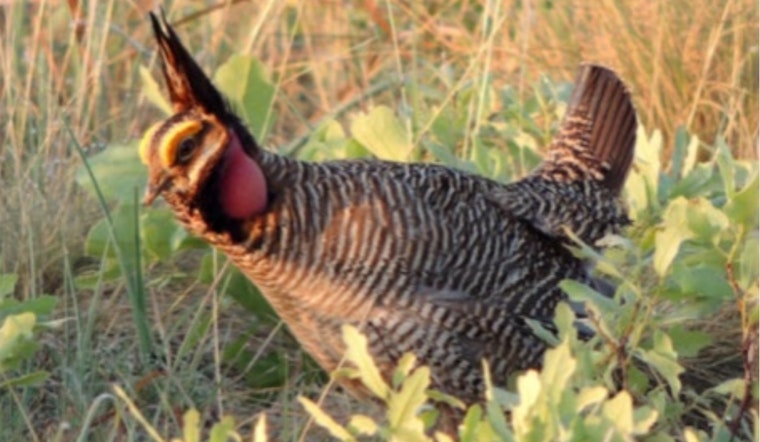
Colorado’s State Land Board is staring down a big decision that could reshape huge swaths of southeastern rangeland, and a lot of folks who run cattle out there are not thrilled. A new draft stewardship plan would sharply limit development on state trust lands across the lesser prairie-chicken’s range, pairing a 2.2-mile buffer around active leks with habitat goals and grazing incentives meant to nudge the landscape in the bird’s favor. Local leaseholders and ranchers say the proposal brushes past years of voluntary conservation on private ground and could tangle with the board’s core job of generating money for public schools.
What the plan would actually do
As reported by the Denver Gazette, the proposed Lesser Prairie-Chicken Stewardship Action Plan would block new oil and gas, solid mineral and renewable-energy leasing within 2.2 miles of active leks in focal areas and in the Sand Sagebrush Grassland (SSGG). It would also set no-surface-occupancy standards for oil and gas within that buffer in the bird’s estimated occupied range.
The staff playbook goes beyond just drawing circles on a map. It directs employees to promote regenerative grazing practices, consider deferred-grazing or other incentive programs, and give lessees information about grassland carbon and soil sequestration with possible revenue-sharing options. Seasonal habitat assessments are slated to begin in late spring and summer 2026, with a target of raising habitat-quality assessment scores by at least 10 percent in the aggregate across state trust lands.
The plan also calls for a phased conservation-bank project beginning in 2027. The U.S. Fish and Wildlife Service’s species status assessment notes that the State Land Board manages about 84,250 acres of surface and roughly 170,300 acres of mineral estate inside the lesser prairie-chicken’s estimated occupied range, which highlights just how much trust property overlaps the bird’s remaining habitat.
A fragile Colorado stronghold
Colorado Parks and Wildlife describes the state’s lesser prairie-chicken populations as small and highly fragmented, with many of the remaining birds tied to Conservation Reserve Program (CRP) fields and a limited number of public grasslands. CPW points to past translocation efforts and habitat-improvement projects and runs a habitat program that prioritizes work near active leks as part of ongoing recovery efforts.
Those on-the-ground projects, from native grass plantings to lek-focused habitat work, are a big reason state and federal managers keep circling back to voluntary conservation as the backbone of any long-term recovery plan.
The bigger fight over a shrinking bird
Across its five-state range, the lesser prairie-chicken is a fraction of what it once was. Audubon reported that roughly 34,000 birds remain scattered across parts of Colorado, Kansas, New Mexico, Oklahoma and Texas, while national coverage has pegged the current count in the low-to-mid tens of thousands and zeroed in on the legal battles over federal protections.
The tug-of-war in court and at federal agencies over Endangered Species Act listings helps explain why state officials are tightening their own rules even as several states and industry groups push back. Colorado’s proposed stewardship plan drops right into the middle of that policy storm.
Ranchers, revenue and the trust mandate
Ranchers and leaseholders told Denver Gazette reporters they worry the proposal glosses over the fact that decades of voluntary stewardship on private and leased ground created much of the suitable lek habitat in the first place. They argue that heavy new limits on development could punish the very people who kept grass on the landscape.
Board staff says the stewardship plan is designed to balance habitat improvement with the land board’s fiduciary duty to bring in revenue for public schools. Critics counter that tighter leasing rules and new no-surface-occupancy zones inside the 2.2-mile buffers could cut into royalties and other trust income, putting classroom dollars on the line in the name of bird habitat.
The State Land Board is scheduled to meet in Lamar this week, with the stewardship plan on the agenda and staff ready to walk through habitat assessments and program options. If the board signs off, implementation would stretch over several years, starting with habitat assessments this spring and summer and then phasing in conservation-bank and incentive projects in 2027. That leaves ranching communities from the South Platte’s grazing country to southeastern Colorado weighing how much conservation gain is worth the potential economic hit.





