

























































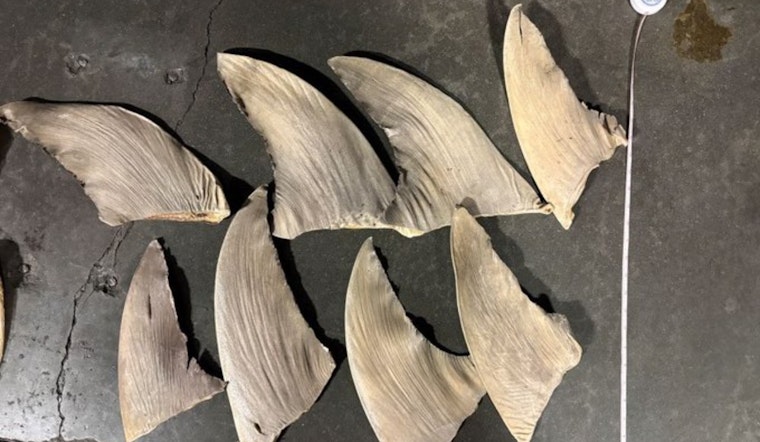
A routine landing turned into a wildlife bust yesterday when California officers intercepted a private jet flying in from Hawaii and found it loaded with shark fins, according to state officials.
The California Department of Fish and Wildlife (CDFW) said the stop was an enforcement action coordinated with federal partners and described it as part of a broader push to clamp down on illegal wildlife trafficking into the state.
In a post on X from the California Department of Fish and Wildlife, the agency said its wildlife officers, "working with federal partners," intercepted the aircraft and removed the fins. The post called shark finning "cruel and illegal" and urged anyone who sees shark fins for sale to contact the CalTIP line at 1-888-334-2258. Officials did not say which airport was involved, how many fins were seized, or whether anyone was arrested.
CDFW wildlife officers, working with federal partners, intercepted a private jet from Hawaii illegally transporting shark fins to California. Shark finning is cruel and illegal. If you see shark fin for sale, contact CDFW CalTIP at 1-888-334-2258. pic.twitter.com/RJKBT7DPRj
— California Department of Fish and Wildlife (@CaliforniaDFW) April 28, 2026
Legal framework and enforcement
California banned the possession, sale, and distribution of detached shark fins with AB 376, which added Section 2021 to the Fish and Game Code and took effect in 2013. The measure, detailed in the California Legislature record, frames the prohibition as a conservation step aimed at cutting demand.
At the federal level, NOAA Fisheries notes that the Shark Fin Sales Elimination Act, adopted as part of the 2022 National Defense Authorization Act, prohibits possession, transport, and sale of detached shark fins nationwide. Those overlapping state and federal rules give officers multiple avenues to seize contraband and pursue potential violations.
National seizures and rising enforcement
The private jet interception lands amid a series of bigger shark fin busts. Last month, U.S. Fish and Wildlife Service inspectors seized about 50,000 dried shark fins from shipments moving through Anchorage and other U.S. ports, according to Hawaii News Now. Several of those shipments were reportedly disguised as car parts and appeared bound for Hong Kong, a pattern investigators say points to organized trafficking networks.
Officials say recent cases like these have pushed federal agencies and state wildlife officers to coordinate more closely at airports and seaports.
What officials are asking
CDFW highlighted the CalTIP tip line in its post and urged the public to report suspected shark fin sales. Tips can be submitted anonymously and can provide the first break in a case when shipments are hidden among legitimate cargo.
Enforcement efforts typically rely on cargo manifests, airline records, and interagency checks at major transportation hubs to spot suspicious loads and trace them back to shippers or buyers. CDFW said it plans to release more details on the private jet case, including the amount of fins seized and any potential charges, only after investigators and prosecutors finish their initial review.
Why it matters
Sharks sit near the top of marine food webs, and conservation groups warn that relentless demand for fins can speed up declines in already vulnerable species. Strong checks at borders and airports are one of the tools agencies use to reduce market pressure on shark populations and disrupt trafficking routes.
Authorities have not released further information while the investigation continues. CDFW and its federal partners are expected to provide updates as the case moves forward. Anyone with information about suspected shark fin sales or trafficking is asked to contact CalTIP at 1-888-334-2258.





