

























































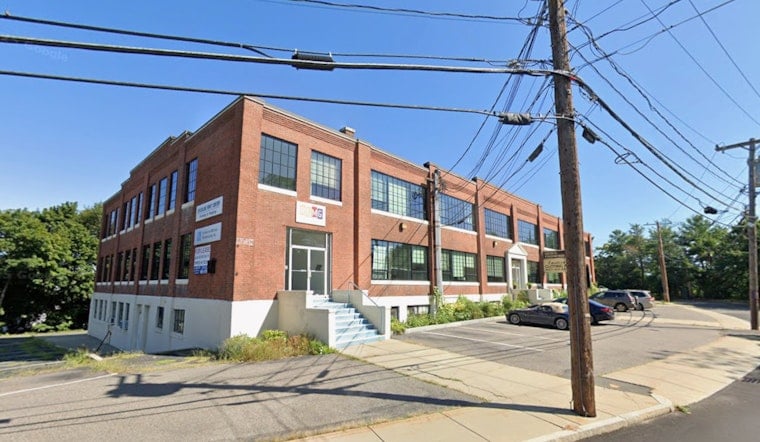
In a nondescript Watertown building, ranks of robots are quietly drilling the basics of human work: stacking pallets, nudging boxes into place, and repeating those moves until they no longer need a human looking over their shoulder. The setup is part of Tutor Intelligence’s new headquarters, which local TV has labeled “America’s largest AI robot data factory,” a kind of industrial-scale classroom built to capture the messy, real-world data that modern robots need in order to stop fumbling their way through tasks. For neighbors, it is equal parts bragging rights and a blinking sign that the future of factory work has arrived down the street.
Reporter Alyssa Andrews from CBS News Boston recently toured the operation and described it as “America’s largest AI robot data factory,” showcasing robots practicing warehouse chores like pallet stacking and box handling. Her segment framed the floor less as a traditional production line and more as a data mine, where each repetitive task and every correction is harvested so the software steering those machines can learn faster.
Tutor Intelligence, an MIT CSAIL spinout focused on warehouse and manipulation robots, says it has opened a 35,000-square-foot Watertown headquarters that includes a simulated warehouse and “Data Factory 1,” a humanoid training floor that the company says holds around 100 robots and can crank out about 10,000 hours of training data every week, according to its LinkedIn page. In recent posts and an open-house listing, the company has been keen to stress that this is primarily a large-scale training ground, not a traditional manufacturing plant, even if it looks like one at first glance.
How the 'data factory' actually trains robots
For all the talk of autonomy, humans are still very much in the loop. When a robot freezes up or botches a move, Tutor’s staff can remotely “tutor” the machine, guiding it through the task while the system records every motion and decision. Those remote teaching sessions are then folded back into the models so the robots can handle the same scenario solo the next time around, The Boston Globe reported in a recent profile. Engineers argue that this kind of training in real-world environments creates richer, more reliable data than what they can get from simulations alone.
What it could mean for jobs and manufacturers
That same training is what has some people eyeing their paychecks. Industry and academic experts warn that once robots get good enough at these repetitive jobs, they will inevitably start replacing some of the routine roles on packaging and warehouse lines. “There’s no world in which an AI operator can train the system for every situation that may occur,” Taskin Padir told The Boston Globe, though he estimated that embodied AI could eventually take over a sizable share of manual work. Tutor, for its part, pitches the technology directly to operators’ bottom lines: the company’s website says a Cassie palletizer can be hired for as little as $14 an hour, a figure clearly meant to make cost-conscious manufacturers pause and do the math.
Tutor held an open house around April 23 at its new Watertown campus, and the company says the facility will speed up research into dexterous manipulation while feeding the training pipelines for robots it deploys across the country. For now, the site functions as a flashy testbed and a concrete reminder that the Boston-area robotics cluster is rapidly shifting from lab to factory floor, with local employers and workers watching closely to see just how far these machines can go and how many people they might eventually replace.




