

























































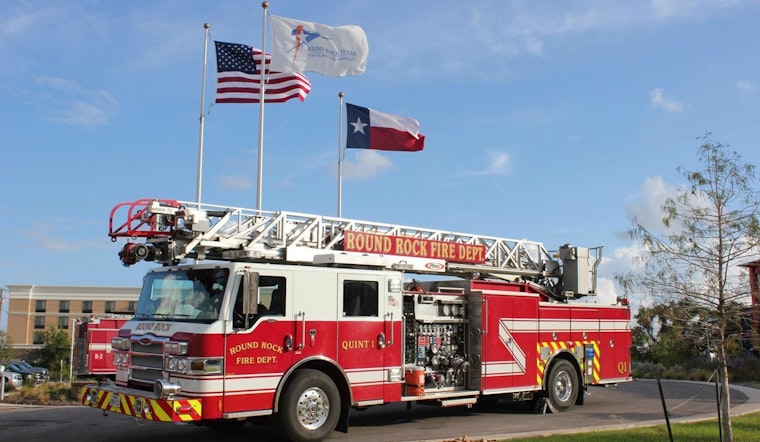
Round Rock voters are staring down a high-stakes decision on Proposition B on May 2, a citizen-led charter amendment that would lock national fire staffing benchmarks and response time targets into city law. Supporters, led by the local firefighters association, argue the move would guarantee enough people on every truck and engine. City leaders warn that tying those standards to the charter could drive up costs and tie the city’s hands at budget time. The fight has quickly become the marquee issue of this spring’s election in the fast-growing suburb just north of Austin.
What Proposition B Would Do
Proposition B would add a new article to the city charter that requires the Round Rock Fire Department to follow NFPA 1710 minimum staffing levels and performance objectives, with deadlines phased in between 2027 and 2037, according to the City of Round Rock. The ballot language also calls for a biennial compliance analysis by the IAFF and waives the city’s sovereign immunity so that enforcement lawsuits could be filed if the city falls short. If voters approve it, the standard would live in the city charter itself instead of as a personnel or budget policy that future councils could more easily change.
The National Standard At Issue
NFPA 1710 generally calls for four firefighters on engines and truck companies to begin fire attack and rescue operations, according to Firehouse. The city notes that “each engine and aerial apparatus currently has 4 firefighters assigned per shift, but the department’s minimum staffing level is 3,” and that vehicles can respond with three personnel when others are on leave, per the City of Round Rock. Round Rock’s population has climbed in recent years, with the U.S. Census estimating roughly 135,359 residents in 2024, while the fire department handled more than 15,000 calls that same year, which supporters say makes staffing a front-burner local issue (U.S. Census Bureau).
Firefighters' Case
Organizers with the Round Rock Professional Firefighters Association frame the charter change as a matter of safety and predictability for both residents and crews. “We are highly trained professional firefighters who at the drop of a hat would risk our lives to save someone we don’t know,” union president Billy Colburn said, as reported by KEYE/CBS Austin. Backers point to the long, phased timeline and the planned IAFF audits as tools meant to keep implementation realistic rather than overnight.
City Leaders Push Back
Mayor Craig Morgan and other city officials counter that Round Rock is already pouring money into fire services and that turning staffing formulas into charter law would undercut the city’s flexibility when needs change. “It’ll approach over $200 million, that’s a 34.3% tax increase,” Morgan told KEYE/CBS Austin, referring to the city’s estimate of the long-term cost. City spokespeople also point to a recent increase in fire department funding and voter-approved bond projects for new stations and a training center. Critics of Prop B argue that the charter is the wrong place to lock in staffing levels that have to compete with other priorities in every budget cycle.
Timeline And Voting Details
If approved, the amendment would roll out staffing and dispatch benchmarks over the next decade, with ladder and truck companies targeted for four-person staffing in 2027 and response time goals phased through 2037, as outlined by Community Impact. The measure is set to appear on the May 2, 2026, ballot. Under Texas’s election calendar, early voting is scheduled to run from April 20 through April 28, according to the Texas Secretary of State.
Legal And Budget Implications
The proposal’s waiver of sovereign immunity would mean, in practical terms, that “firefighters or residents can take legal action to enforce compliance,” Community Impact notes. That possibility has sharpened arguments over whether enforcement should rest with courts or stay firmly in the realm of politics and budgets. With competing cost estimates and a long list of other city needs, the May 2 vote will determine whether Round Rock locks national staffing models into its charter or keeps them as goals that future councils can revisit at the budget table.



