

























































Seattle has quietly graduated from quirky early adopter status to something closer to a mass market for electric cars. Nielsen data put the metro at about 165,000 EV households in 2025, roughly 7.5% of all households, and about 57% of those are Teslas. That growing fleet is colliding with gas prices that have hovered near recent highs, sharpening the economic case for going electric as city and state agencies scramble to add chargers and push federal funds into areas that still lack reliable public charging.
What the numbers say
Nielsen's Scarborough data, as reported by The Seattle Times, show the Seattle market's EV household share rising to about 7.5% in 2025, up from roughly 1.3% in 2022 and placing Seattle seventh nationally. The Times notes that Nielsen's sample included about 103,000 adults overall and roughly 2,000 adults in the Seattle market, which underpins the local estimates. Taken together, the report estimates about 165,000 EV households across the metro.
Pump pain is speeding the shift
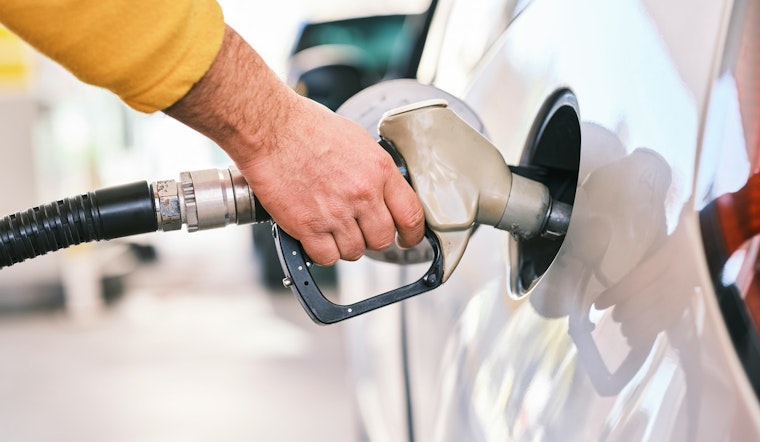
Higher fuel costs are a clear catalyst. Local reporting shows the Seattle-Bellevue-Everett area recently hitting averages near $5.70 a gallon, a level that is pushing some buyers to run the numbers on switching to battery power. As FOX 13 Seattle reported, AAA pegged the metro average at about $5.72 in its latest survey. For many households, the comparison between higher per-mile gasoline costs and home charging is starting to tilt in favor of EV ownership.
Tesla dominates locally
Nielsen's market breakdown shows Tesla accounting for about 57% of EV households in the Seattle area and puts Seattle third nationally for Tesla ownership, according to The Seattle Times. That concentration helps explain why EV ownership in the market skews higher income. Nielsen's median income estimate for EV households is roughly $208,000, compared with about $89,000 for all households. The pattern suggests that the early gains in EV adoption have favored single-family and higher-income neighborhoods.
Charging and policy
Officials know that buying the cars is only half the battle, since chargers are what actually keep them on the road. A recent new $12.16 million highway charger grant outlines about $12.16 million in NEVI awards for highway chargers, and WSDOT and its EV-MAP tool are guiding where those installs will go across the state. Those investments should help ease long-haul range anxiety, but neighborhoods without curbside access or nearby stations still lag behind.
Who benefits so far
Even as adoption climbs, the gains are uneven. Households with higher incomes, garage parking and workplace chargers have had the easiest path to ownership. State efforts, including Washington's Electric Vehicle Coordinating Council and the EV-MAP planning tool, aim to target chargers and rebates toward underserved areas, according to the state's commerce office (Washington Commerce). Whether policy and new chargers keep pace with demand will determine if the region's EV growth becomes broadly accessible or stays concentrated among those who were already best positioned to plug in.
For Seattle drivers, the math is shifting quickly. At current pump prices and with a maturing used-EV market, more households are likely to feel the pull to go electric. The city's move from an EV early-adopter scene to a truly mainstream market, though, will hinge on how fast chargers, incentives and targeted programs reach the neighborhoods that need them most.





