

























































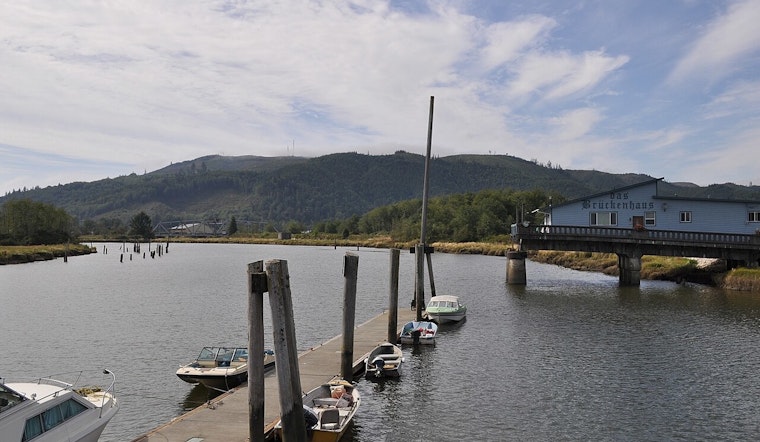
A juvenile gray whale turned heads this week after surfacing in the north fork of the Willapa River near Raymond in Pacific County, offering riverfront views of a creature that usually sticks to the open coast. Staff with Cascadia Research Collective who reviewed photos say the whale appears thin but is breathing and moving normally.
As reported by KIRO 7, Cascadia Research Collective has asked people to give the animal plenty of space. A CRC team was on the river Thursday trying to relocate the juvenile to deeper water but was not able to move it. The group says it is hoping the whale will swim out on its own, and that plans are being coordinated with partners at NOAA and the Washington Department of Fish & Wildlife in case a hands-on rescue becomes necessary. Anyone who sees the whale is asked to report sightings to the Cascadia stranding hotline at 360-791-9555.
Officials Monitoring And Prepared To Act
The Cascadia Research Collective runs a West Coast stranding response program and posts reporting instructions and contact information on its website. Cascadia Research Collective notes that responders try to give large whales room to find their own way and that trained teams only attempt on-water interventions when conditions are safe and likely to help the animal. Local responders work with federal and state partners to assess the whale’s condition and decide what, if anything, should be done next.
Why Whales Sometimes Stray Into Bays And Rivers
Gray whales occasionally detour into estuaries or tidal flats to feed, or because younger animals drift off established migratory routes. A small group of gray whales known as “the Sounders” has been documented returning to the Salish Sea each spring to feed on ghost shrimp, a habit researchers say can make inland sightings more common during migration season. That long-term behavior has been tracked by regional researchers and local sighting networks.
How To Report And Watch Responsibly
NOAA advises people to stay a safe distance away from large whales, roughly 100 yards, and to avoid anything that could stress the animal or block its movement. If you encounter an injured, entangled or stranded marine mammal, officials recommend noting the date, time and exact location and reporting it to the West Coast stranding hotline. NOAA and Cascadia say photos or video taken from a safe distance can help responders evaluate the situation. Officials report they will continue to monitor the Willapa River and will only intervene if the whale’s condition indicates that direct action is necessary.



