

























































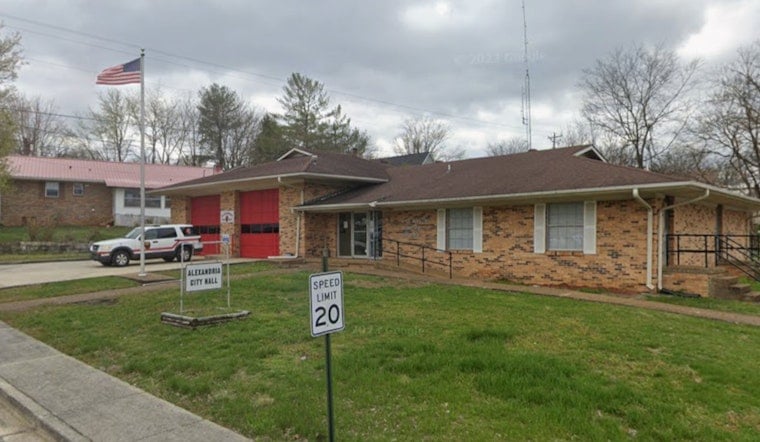
Alexandria is trying to claw its way out of a costly wastewater mess, appealing a state enforcement order that slapped the town with roughly $130,000 in penalties while officials say they still do not have the monitoring equipment they need. When that bill is stacked on top of an earlier drinking-water enforcement action, the total tab climbs to $136,593.80 in state fines, a number local leaders warn would put extreme strain on the town’s finances. They have blamed a former contractor for some of the breakdowns and insist repairs are in the works.
According to NewsChannel 5, the Tennessee Department of Environment and Conservation issued a March 2026 order assessing $130,103.80 for wastewater violations, and the town filed an appeal on April 22 asking regulators for 120 more days to finish repairs. That reporting also notes that an earlier March 2025 TDEC order found Alexandria at times exceeded federal limits for total haloacetic acids, missed required bacteriological and chlorine-residual testing, and failed to notify residents when it was required to do so. Town officials told the state the wastewater violations appear tied to faulty equipment and pointed the finger at former contractor Rich Potter and his company; Potter’s contract was terminated in July 2025.
What the state testing shows
Independent compilations of test results show elevated disinfection-byproduct readings in Alexandria’s finished water. According to EWG, the utility’s HAA5 levels sit at about 39.9 parts per billion and several trihalomethane compounds land above EWG health guidelines. The town’s own water department pages note a “Tier 3 Violation 2024” on file with state regulators as officials work through monitoring and notification problems, according to the Town of Alexandria.
Operator problems and budget strain
Local reporting shows Alexandria’s water-and-sewer operator was pushed out in July 2025 after months of operational trouble, which left the town without an experienced long-term operator at the same time that equipment problems stacked up. The Tennessee Board of Utility Regulation has placed the utility under enhanced oversight in recent years, and the town recently wrapped up a rate study that recommended significant sewer-rate increases to cover capital needs. It is a collision of enforcement orders, aging infrastructure, and a limited local budget, according to WJLE and the Tennessee Board of Utility Regulation.
State grants and the next steps
There is at least one bright spot on the balance sheet. TDEC awarded Alexandria a $674,931 ARP grant in 2023 to develop an asset-management plan and pay for upgrades such as new meters, booster pumps, and a backup generator, projects officials say should help stabilize both drinking-water and wastewater operations. The town’s appeal of the March wastewater order is still pending with state regulators, while Alexandria asks for extra time to buy and install critical monitoring equipment it says it still does not have. The grant money is intended to help tackle those very needs, according to the TDEC announcement.
What residents should know
For residents at the tap, the guidance is more practical than political. Customers who spot discolored water, unexplained bill spikes, or other issues are urged to call the Alexandria water department at (615) 529-2171 or bring written questions to the Board of Mayor and Aldermen at Town Hall, where utility staff is based. Records show the system was in compliance with federal health-based standards for the most recent EPA quarter, but health-guideline screens flag several disinfectant-byproduct readings, according to EWG. Residents with specific health concerns should talk with a physician and consider point-of-use filtration as an interim step, guidance the Town of Alexandria has shared.
Why it matters beyond Alexandria
Alexandria’s fight is playing out while Tennessee tightens the screws on failing wastewater systems at the statehouse. House Bill 803, along with companion SB 564, moved through the General Assembly in April 2026 and changes appeal windows and regulatory duties, a shift that could affect small utilities trying to juggle repairs, staffing, and enforcement. The bill was sent to the governor in mid-April and highlights how local fixes for aging pipes now sit alongside fresh oversight requirements, according to the Tennessee General Assembly.
For now, Alexandria is trying to thread the needle, balancing its appeal, missing monitoring gear, and the hunt for replacement parts and qualified operators while residents watch water quality and monthly bills. We will keep watching how the appeal plays out, what TDEC orders next, and whether the town manages to get the equipment and staff it says it needs.





