

























































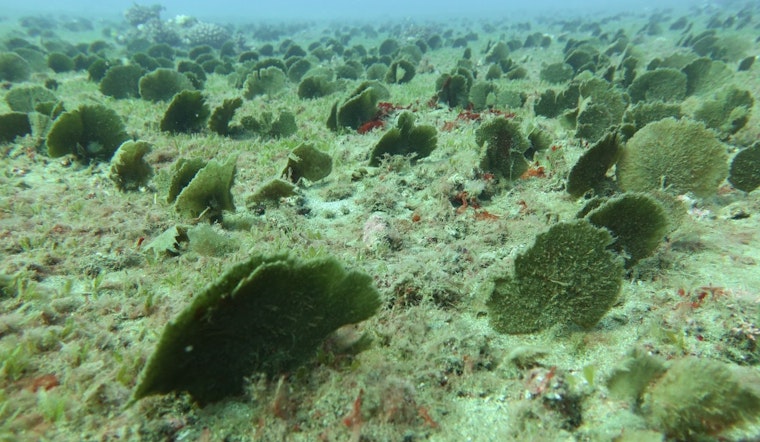
An invasive green seaweed is quietly muscling in along Kauai’s south shore, and state marine biologists say it is already forming patchy underwater meadows that can reshape sandy seafloor habitat. The culprit, Avrainvillea erecta, was documented in October surveys from Kaumakani all the way across to Poʻipū, with densities ranging from just a few blades to more than 80 percent cover in some spots. Because it prefers deeper sandy areas, it can fly under the radar and may hitchhike to new locations when anchors or chains snag blades or fragments.
Where It Was Found
According to the Department of Land and Natural Resources, the Division of Aquatic Resources (DAR) recorded Avrainvillea erecta on Kauaʻi for the first time in 2025. Their October 2025 surveys confirmed established populations off Kaumakani, from Lāwai Kai to Spouting Horn, and offshore of Kōloa Landing to Kiahuna Beach in Poʻipū. The alga typically occupies sandy seafloor at around 60 feet deep and has been observed down to about 120 feet around the island, which helps explain why many casual ocean users have not seen it.
Why Scientists Are Worried
Avrainvillea species are not just another pretty green in the lineup. They can build dense, single-species meadows that trap sediment, alter sandy habitats, and crowd out native seagrasses and algae. Scientists say similar invasions have already reshaped parts of Oʻahu’s south shore. Research on the genus in the main Hawaiian Islands highlights how quickly these seaweeds can transform nearshore ecosystems and potentially reduce habitat for native fish and invertebrates, according to Frontiers in Marine Science.
How Boaters Can Help
DAR is urging boaters, fishers, and other ocean users to steer clear of known A. erecta patches when dropping anchor. If avoiding those areas is not possible, the agency wants people to thoroughly clean and inspect anchors and anchor lines before moving on. The state release recommends sanitizing gear with spray alcohol or a diluted bleach solution, setting the anchor and chain into a 5-gallon bucket during cleaning, and dumping the rinse water on land instead of back into the ocean, DLNR said. Circular patch patterns seen at Kaumakani suggest anchoring may already be helping the algae catch a ride to new sites.
How To Spot It And Report It
A. erecta stands out once you know what to look for. Each plant features a single fan-shaped blade that rises from a long stalk buried several inches into the sand. Divers have reported blades ranging from bright green to olive, and sightings have come in from depths that most casual swimmers will never visit. Suspected sightings, including location, depth, and photos when possible, should be sent to DAR at [email protected]. Local coverage of the detection and reporting push was provided by The Garden Island.
What Comes Next
Because A. erecta was only recently recorded on Kauaʻi, state teams still have a window to remove small, localized patches before the algae spreads widely. Elsewhere in Hawaiʻi, management has relied on a mix of targeted physical removals, community reporting, and even urchin biocontrol to keep invasive algae in check. Experts say community vigilance, careful anchor hygiene, and prompt photo-verified reports will help DAR decide where to focus removal efforts. Local groups may also be tapped to help with follow-up monitoring and cleanups, according to Hawaii Sea Grant.





