

























































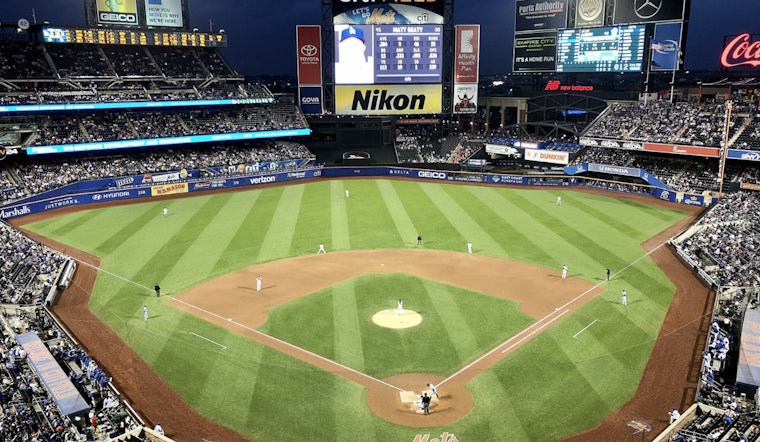
The price tag for putting a retractable roof on Citi Field has officially moved from daydream to jaw-drop territory. Engineers have told the Mets that retrofitting the ballpark would now run roughly $1 billion, a figure so big it has effectively frozen the conversation. For Mets fans in Queens the takeaway is blunt: even with a working roof just across the parking lot, covering their own park would be a generational project, not a quick fix.
Jon Heyman reported in the New York Post that converting Citi Field into a retractable-roof stadium would now push past the billion-dollar mark. That tracks with earlier word that owner Steve Cohen had already explored the idea. In 2023 he was reportedly quoted about $800 million for a roof, a number that surfaced in coverage by CBS Sports. Heyman also noted that during the Wilpon era, planners briefly kicked around a roof during the original design phase and found it would have been far cheaper at that point, on the order of $100–$125 million more at the time.
Why Retrofitting Blows Up the Budget
Bolting a moving roof onto an already-finished ballpark is not like swapping out the scoreboards. It typically means new structural supports, reworked concourses, rerouted HVAC, rethought drainage and a fresh look at sightlines, all while trying to preserve the field and the fan areas that actually make the place feel like home.
Those headaches are not unique to Citi Field. When officials in another city studied whether to overhaul an existing stadium or just start from scratch, one piece of local reporting boiled the stadium math down to a single line: “in general, it costs more to retrofit a roof than to build from scratch,” because of the giant footprint and the long shutdowns that tend to follow. WCPO laid out those tradeoffs while covering that renovation-versus-replacement debate.
What the Mets Would Be Buying (and What Is Already Next Door)
Across the way, the example Mets fans can literally point to is Arthur Ashe Stadium, which already has a retractable roof that was phased in over time. The USTA is in the middle of a multi-phase, $800 million reimagining of the broader US Open site, described as a self-funded modernization that will be completed without interrupting play, according to a USTA release cited by TennisTourTalk.
The roof at Arthur Ashe did not just drop in overnight either. The first competitive play under the new enclosure came in 2016, as players and officials put the system through its paces during the tournament. Early matches under the closed roof, including the first win in those conditions, were documented by Sky Sports.
Politics, Parkland and the Practical Hurdles
The challenges are not all concrete and steel. Any serious attempt to rebuild or significantly alter Citi Field would have to navigate a thicket of land-use and political questions. The ballpark sits inside and alongside portions of Flushing Meadows-Corona Park, and much of the surrounding parking is city-owned.
Local groups have already mobilized against efforts to repurpose those lots for other big-ticket ideas, arguing that parkland protections and neighborhood impacts need to come first. Coverage of rallies and public testimony has highlighted how vocal the community can be. QNS chronicled those objections, underscoring that both Albany and City Hall would be deeply involved long before any bulldozers rolled in.
Bottom Line
On paper, yes, Citi Field could eventually get a roof. In practice, a retrofit that avoids season-crushing closures, solves for sightlines and drainage, and clears the parkland and political hurdles starts to look less like a tweak and more like a multi-year, multi-agency redevelopment project.
Whether you lean on the roughly $800 million estimate that surfaced in 2023 or the near $1 billion figure back in the spotlight this week, the math helps explain why even the richest MLB owners tend to treat roofing an existing ballpark as a once-in-a-generation move rather than an off-season upgrade.




