

























































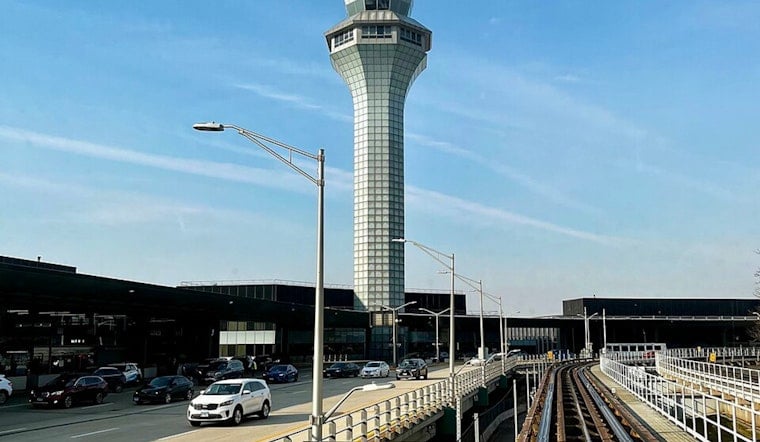
Thunderstorms muscled into the Chicago area Thursday morning, prompting the Federal Aviation Administration to briefly freeze departures to O'Hare International Airport and leaving passengers watching the radar as closely as their boarding passes.
The FAA ordered all flights bound for O'Hare to stay put at their departure airports at 10:38 a.m., with the ground stop set to expire at noon and a "medium" chance it could be extended. The weather had already been chewing up the schedule: 34 flights were canceled at ORD in the previous 24 hours, and delays at the field had stretched past the one-hour mark.
According to FOX 32 Chicago, the FAA's 10:38 a.m. order came with that tentative noon target to lift the stop, along with the caveat that storm activity could force a longer hold. The outlet also tallied the 34 cancellations at O'Hare over the prior day as storm cells rolled through the region.
How ground stops protect operations
Ground stops keep aircraft parked at their departure airports so the arrival flow into a busy hub like O'Hare does not overwhelm the runways or the ramp. They are also a safety tool for workers on the ground when lightning, heavy rain or other hazards make it unsafe to marshal aircraft or handle baggage.
The FAA's air‑traffic guidance defines ground stops and details how ground‑delay programs are used to meter arrival rates into congested hubs, especially when weather shrinks the amount of usable airspace or runway capacity.
Delays ripple beyond the field
Flight‑tracking data from FlightAware showed the storm's impact in hard numbers: average departure delays of about 1 hour 36 minutes and arrival delays near 1 hour 9 minutes at ORD during the worst of the weather. Those kinds of hold times can ripple through the system as aircraft and crews show up late for their next legs, forcing airlines to cancel or rebook travelers when one delay collides with multiple scheduled flights.
What travelers should do
Anyone flying to or through O'Hare today is being advised to stay glued to their airline's app or website for real‑time updates, budget extra time at security, gates and baggage claim, and be mentally prepared for a rebooking conversation if their flight gets caught in the shuffle.
The FAA's daily air‑traffic report for April 16 flagged thunderstorms in the Chicago area, according to the FAA daily air‑traffic report, a reminder that even after a storm line moves on, the cleanup on the schedule can lag behind for hours.
Repeated storm disruptions this spring
This multi‑wave weather pattern is starting to feel like a regular at O'Hare. Earlier this month, a pre‑dawn round of storms triggered another ground stop, spotlighting how often spring thunderstorms lean on ORD's operations. For background on that earlier disruption, see Hoodline's coverage of the pre‑dawn ground stop at O'Hare.





