

























































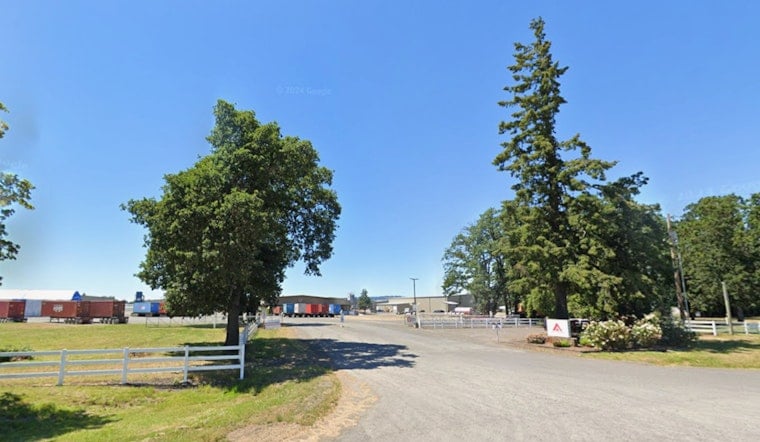
Anderson Hay is asking a bankruptcy judge to sign off on the sale of its Aurora, Oregon, straw‑processing complex as part of a Chapter 11 restructuring that would take the company out of the straw business altogether. The proposed deal would pull a major export operation out of the Willamette Valley and could reverberate through farms that supply compressed grass straw to overseas buyers. Court papers describe the Aurora property as a packaged business sale, with processing, production, and extensive storage all bundled together.
A March 30 bankruptcy asset listing pegs the Aurora operation at $10,750,000, and Anderson’s related entities remain in Chapter 11 in the U.S. Bankruptcy Court for the Eastern District of Washington, according to sale notices and docket records. Per Inforuptcy, the Aurora assets are on the block as a going concern in the Chapter 11 cases.
Reports on the company’s financial spiral point to shipping disruptions and a cooling global straw market that have squeezed margins for exporters and their suppliers. That backdrop has driven Anderson’s push to shed assets while it restructures, with industry coverage warning of broader fallout for forage growers across Oregon and Washington. As OPB has documented, the company’s troubles have rippled through regional supply chains.
Aurora property and the buyer
Court filings and a purchase agreement identify Millicent Property Co. as the would‑be buyer and describe the Aurora site as more than 26 acres just north of the city. The property includes a 41,000‑square‑foot processing and production building plus about 320,000 square feet of hay storage. The documents note that the plant was originally designed for much higher volumes and is now under‑utilized, and they flag the lack of surface‑water irrigation, which could limit some agricultural reuse. These details are reported by Capital Press.
What growers could face
Growers who bale and sell grass straw to exporters say a change in ownership could shake up who buys their product and when they get paid, injecting fresh uncertainty into this season’s harvest. Anderson’s bankruptcy has already sparked courtroom fights over payments to suppliers, with company lawyers arguing that keeping those commercial relationships intact is critical to any workable reorganization. Industry coverage has stressed how heavily regional growers rely on a small handful of export buyers; OPB has laid out those risks in detail.
How the cash would be used
In court, Anderson has said the sale proceeds would go toward paying down secured debt, with roughly $10 million of the purchase price slated for PGIM Real Estate Finance. Filings list PGIM claims in the mid‑teens of millions. At a recent hearing, company counsel told the judge that Anderson plans to file a reorganization plan by May 1, 2026, and that the plan will spell out how growers and other creditors are paid. Those points are outlined in the purchase motion and related papers, according to court records compiled by PacerMonitor.
Next steps
The proposed sale still needs a green light from the judge and could face pushback from creditors before it can close under bankruptcy rules. If the court approves the bid, the buyer would take over the site on the terms set in the sale motion, and the Chapter 11 plan process would sort out remaining claims and farmer payments. Anderson and the prospective buyer have not gone beyond the four corners of their filings with any public statements, while local officials and growers keep a close eye on the case and what it might mean for the Willamette Valley’s export muscle.


