

























































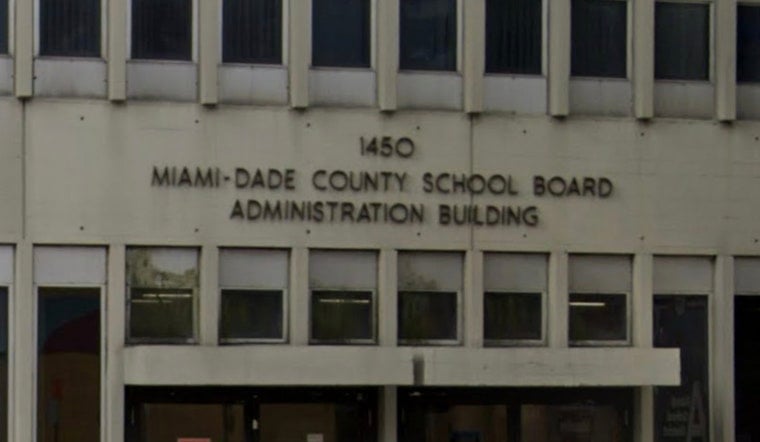
Success Academy is officially coming inside Miami-Dade County Public Schools. After a tense meeting, the Miami-Dade school board on Wednesday approved a deal that lets the New York charter network run classrooms inside five district high schools, the first co-location arrangement of its kind in the county.
The agreement names Hialeah-Miami Lakes, Homestead, Miami Jackson, North Miami and Westland-Hialeah as host campuses, with a relatively small first wave of students spread across those sites. The move lands as the district scrambles to adapt to new state rules that broadened Florida's "Schools of Hope" program.
The board signed off on a Mutual Management Plan on a unanimous vote that was anything but calm. Several members complained they had barely had time to digest the nearly 200-page document. District 1 member Steve Gallon pointedly remarked, "Elections have consequences," while Joe Geller insisted, "we will not be treated as bobbleheads." Superintendent Jose Dotres told the board the district was under a 60-day deadline set in state law and warned that delaying the agreement could trigger legal action, according to the Miami Herald.
Under the mutual management plan, Success Academy will reimburse the district a flat $700 per enrolled student to help cover utilities, nursing, food and custodial services, paid in two installments each year. The document also creates a Campus Coordination Team at each site to juggle bell schedules, arrival and dismissal, and shared safety protocols, while spelling out that the district keeps final say over campus-wide operations. Those details are laid out in the plan included in the board packet, according to Miami-Dade County Public Schools.
How the Schools of Hope law works
Under state law, a "persistently low-performing" school is one that has earned a grade below C in at least three of the previous five years, a definition that opens more campuses to state-approved "hope operators" such as Success Academy. The statute and related state rules require districts to sign performance-based contracts with those operators and to provide access to underused, vacant or surplus buildings and related services. The framework is laid out in Florida Statute 1002.333 and the implementing guidance from the Florida Department of Education.
Local reaction and union concerns
Union leaders, parents and community advocates say the co-location model chips away at local control and can quietly drain district budgets when students, and the state dollars attached to them, shift into charter-run classrooms.
"We are left in a position where the state makes a decision, the district absorbs the cost and the community, and even this board, has limited oversight," United Teachers of Dade secretary Mindy Grimes-Festge told trustees. Local coverage and community briefings have repeatedly described the expansion as an unfunded mandate, according to WLRN.
Big donors and political backing
The Miami-Dade expansion was unveiled last fall on a very public stage, with Gov. Ron DeSantis and Success Academy CEO Eva Moskowitz standing alongside Citadel founder Ken Griffin as he pledged $50 million to launch the network in Florida. National coverage has noted that Success Academy and its wealthy backers pressed for the statutory and rule changes that cleared the way for co-location, turning the local rollout into a high-profile political flashpoint.
The announcement and its national context were reported by The Associated Press and were previously covered in detail in a story on DeSantis' Miami-Dade rollout.
What comes next
The performance-based agreement sets up an annual review that could adjust the $700 per student reimbursement, but it leaves day-to-day coordination to site-level teams. That arrangement could easily spark friction over classroom space, shared facilities, schedules and any extra services Success Academy might request.
Success Academy is now the first state-authorized hope operator to secure a co-location deal with Miami-Dade, and reporting has noted that other charter networks are already eyeing district buildings. District officials say they will track enrollment shifts and budget impacts as the first small cohort of roughly 186 students prepares to start across the five campuses in the 2027 school year, according to the Miami Herald.
Legal and operational risks
The state statute and the district's mutual management plan both outline how to resolve conflicts, including escalation steps if the two sides cannot agree. At the same time, the law sharply limits how far a district can go in blocking a state-approved hope operator from using district space.
Dotres reminded board members that the 60-day clock built into the law left them with few real alternatives and raised the risk of litigation if they stalled. For anyone wanting to parse the fine print, the relevant language is in Florida Statute 1002.333.
The full board packet, including the complete Mutual Management Plan, is posted with Miami-Dade's April meeting materials. The district's document lays out the rules for sharing space, how billing will work and what happens if one side wants changes in the future. It is likely to become the go-to reference as community groups and trustees watch the rollout and debate tweaks to the arrangement; the plan is available through Miami-Dade County Public Schools.





