

























































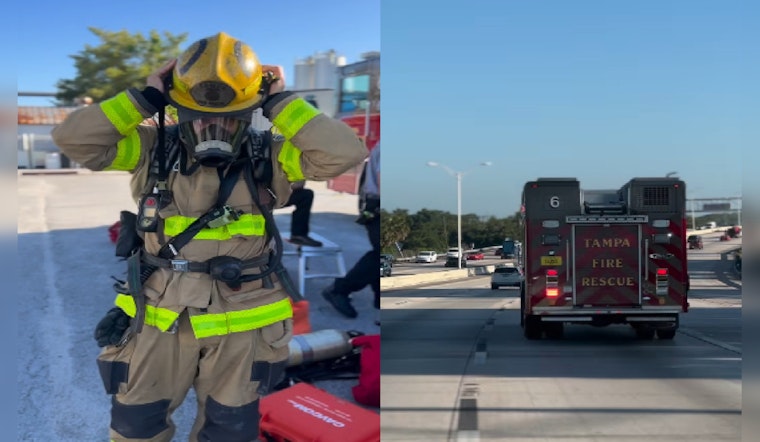
A late Wednesday call in Tampa turned into a full hazmat operation when firefighters discovered an active ammonia leak in the city. Multiple engines, trucks and specialized rescue units rolled in, crews went right to work, and officials say the leak was quickly brought under control with no injuries reported.
What Crews Found And How They Responded
Tampa Fire Rescue reported that the response brought a small army of units to the scene: Engine 13, Engine 6, Engine 11, Engine 24, Rescue 13 and Rescue 24, Truck 1 and Truck 13, Vent 1, District 1 and District 3. Dispatchers kept crews updated with changing conditions before they even arrived, giving firefighters a clearer picture of what they were walking into.
According to the department, the ammonia leak was quickly mitigated and the surrounding area stabilized, a textbook outcome for an incident that had the potential to be far more serious.
Why Ammonia Is A Serious Hazard
The Centers for Disease Control and Prevention notes that ammonia is a strong respiratory irritant that can cause severe lung injury and eye damage at high concentrations. It is not just something that smells bad; in the wrong circumstances it can send people to the hospital fast.
NOAA’s CAMEO Chemicals database adds that anhydrous ammonia can cause frostbite on contact and that responders often use water spray to knock down vapors while they work. Those risks explain why hazmat teams go in with specialized protective gear and rely on atmospheric monitoring before getting anywhere near an active release.
What Residents Should Do
If you notice a strong chemical odor or start feeling burning or irritation in your eyes or throat, get to fresh air immediately. If symptoms worsen, seek medical attention instead of trying to tough it out.
For real-time guidance on possible exposure, you can call Poison Help at 1-800-222-1222 or use online resources from Poison Help. Local residents are also encouraged to follow official channels, including the City of Tampa Fire Rescue page, for public-safety alerts and any street-closure updates from Tampa Fire Rescue.
Local Context
Tampa and Port Tampa Bay move and store industrial quantities of ammonia for fertilizer and refrigeration, which is why the city’s emergency planning documents flag anhydrous ammonia as a key hazmat concern. The city’s emergency operations framework lays out training, mutual-aid agreements and playbook-style tactics for handling similar releases.
Regional after-action reviews from prior ammonia incidents highlight the importance of unified command and the use of water-spray vapor suppression as standard tools during these responses, according to the City of Tampa and Hillsborough County Fire Rescue.
A Facebook reel posted by Tampa Fire Rescue shows video from the scene and reiterates that the leak was contained and no one was hurt. Officials are expected to release more detailed information as post-incident reviews move forward, and this story will be updated as new statements become available.




