

























































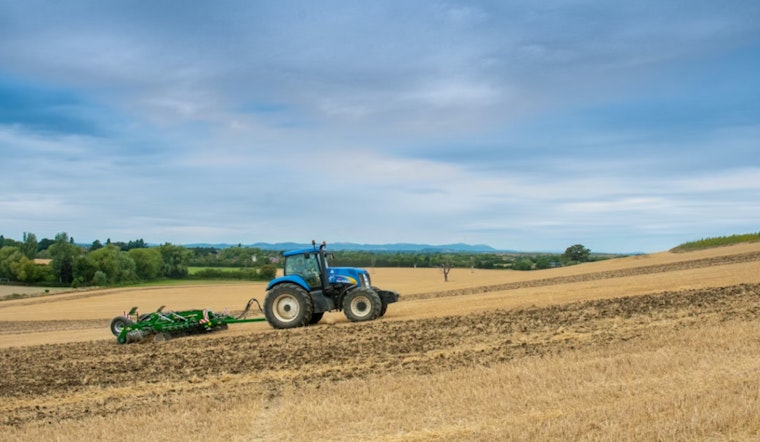
Across North Carolina, spring has turned into a stress test for farmers. An unusually dry stretch has baked fields from the coastal plain to the Piedmont, and sharply higher diesel and fertilizer prices are tightening margins just as planting season hits full tilt. Many growers say the ground is too hard to work, and the spike in input costs is piling on to an already razor-thin year.
Near Parkton, eighth-generation farmer William Gillis says that by this point in April he would normally have more than 400 acres of corn already planted. This year, large portions of his land are so hard and dry that he cannot even get the planter through. Gillis told Spectrum News it has been "probably the most turbulent" season he has worked, so he is holding back, using test plots and waiting for enough moisture to justify going all in.
Drought maps show wide coverage and planting delays
The U.S. Drought Monitor shows large sections of North Carolina locked in moderate to severe drought, with parched soils stretching deep into key row-crop regions. Local weather coverage says the dryness has pushed corn planting roughly two weeks behind where it would normally be at this point in the spring. According to the U.S. Drought Monitor and reporting by WBTV, a combination of rainfall deficits and warm soils has tightened conditions across much of the state.
Global shocks are driving up farm input bills
On top of the dust, growers are watching their fuel and fertilizer bills jump. Gillis told Spectrum News that some diesel and fertilizer blends he relies on have climbed roughly 10% to 30% in just a few weeks.
Market analysts and national outlets tie those increases to global shocks, particularly conflict in the Middle East and the war with Iran, which are tightening shipping and energy flows and pushing up crude, diesel and fertilizer costs worldwide, as reported by AP and Bloomberg. That is a painful mix for producers, since fuel and fertilizer are core, non-negotiable expenses during planting and early crop development.
Planting choices may shift this year
With seedbeds turning to concrete and input bills rising, some North Carolina producers are rethinking what to put in the ground. The USDA’s March Prospective Plantings report shows U.S. growers planning slightly fewer corn acres and a modest increase in soybeans this year, a national trend that could be echoed on risk-averse farms across the state.
Farmers and advisers say one way to protect paper-thin margins is to lean toward lower-input crops or to trim and delay acreage until they have a clearer read on weather and prices. The USDA Prospective Plantings provides the broader national backdrop for those decisions.
Local pressure, state response
In eastern North Carolina, growers told local television reporters that sudden fuel spikes are making budgets feel precarious and forcing last-minute adjustments to purchase plans and planting schedules, according to reporting by WITN. Some say they are juggling which inputs to buy first and how far to stretch existing supplies while they wait for relief that may or may not come.
At the same time, the N.C. Forest Service and Department of Agriculture have rolled out a statewide ban on open burning and canceled burn permits, a step meant to reduce wildfire risk as dry conditions and high fire danger bear down on rural communities. The restrictions were announced in a state press release from the N.C. Department of Agriculture.
Whether timely rain arrives or wholesale prices ease in the coming weeks will largely determine how many acres actually get planted and what harvest looks like this fall. For now, North Carolina’s spring planting window has turned into a high-stakes waiting game for growers, lenders and buyers all along the agricultural supply chain.





