

























































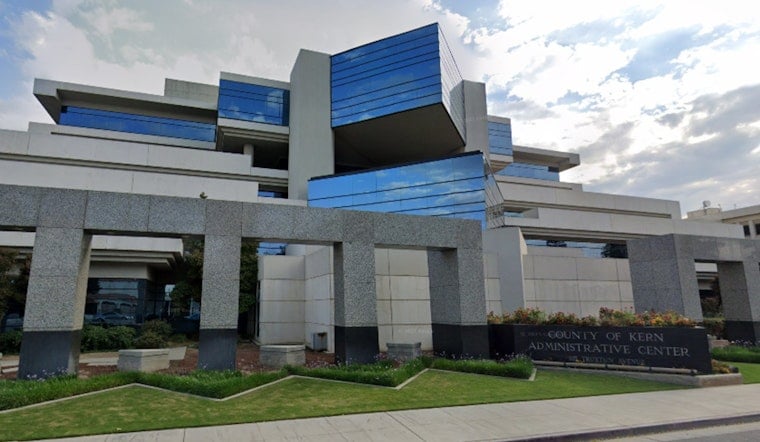
In a case that has rattled Kern County politics and landed squarely in the middle of a statewide legal fight, the son of former Kern County supervisor Zack Scrivner told lawmakers that his father sexually assaulted a sibling, then sidestepped jail when a judge allowed him into a mental health diversion program. Their story has become the emotional backbone of a push in Sacramento to tighten who can qualify for diversion in violent or child-related cases, and it has prosecutors, victims’ advocates and legislators locked in a high-stakes argument over whether a treatment tool has morphed into a loophole for serious offenders.
Family takes testimony to the Capitol
Earlier this year, Christina Scrivner and her son Robert stood beside State Sen. Shannon Grove at a Sacramento news conference, laying out what they say happened inside the family’s Tehachapi home and urging lawmakers to change the law. As reported by KVPR, Robert called his father’s case “a clear example of our flawed system” and pressed legislators to shut down what critics have dubbed the so‑called “Epstein loophole,” a reference to high-profile offenders accused of using mental health claims to blunt criminal consequences.
State filed felony counts
In February 2025 the California Attorney General’s Office filed a felony complaint charging Zachary Nelson Scrivner with three counts of child abuse and two counts of possessing assault weapons, alleging that the conduct occurred on or about April 23, 2024. According to the Attorney General’s filing, the complaint describes alleged sexual penetration and lists firearms that investigators say they seized during a search of the Tehachapi residence. The charging document is on file with the Attorney General’s Office. California Attorney General’s Office.
Judge approved diversion; state asked court to revisit
In December a Kern County Superior Court judge granted Scrivner’s request to enter a mental health diversion program, a move that could lead to the case being dismissed if he successfully completes treatment. The ruling sparked immediate backlash and prompted the California Department of Justice to seek review in a higher court. Local coverage has reported that the Attorney General’s Office filed a petition with the Fifth District Court of Appeal asking the lower court to vacate the diversion order while the department reviews the matter. The Mountain Enterprise.
Son’s account in national coverage
Robert shared additional details in an interview with the New York Post, which identified him as 17. He described the April 2024 night as a chaotic confrontation in which he and a brother had to disarm their father during an altercation, and said he later required surgery on his arm. Those specific personal claims come from the Post’s reporting. The public criminal complaint filed by the Attorney General focuses on the underlying child abuse and weapons counts and does not repeat every detail the family has shared in media interviews.
Lawmakers push tighter rules
At the Capitol, lawmakers from both parties have seized on the Scrivner case as they debate how far mental health diversion should go. Senate Bill 1373, authored by Sen. Shannon Grove, would narrow who may qualify for pretrial mental health diversion and expand judicial discretion to deny it. A companion effort in the Assembly, AB‑2273, informally labeled the “Scrivner Act,” would bar diversion when the underlying facts would amount to certain enumerated serious offenses, even if the formal charges are framed more narrowly. The full bill texts and status updates are posted on the state’s legislative website. California Legislature and California Legislature.
Where the matter stands now
SB‑1373 has been winding its way through committee hearings this spring, picking up amendments as legislators try to balance two goals: preserving diversion for defendants with serious mental health needs while preventing its use in the most violent or child-focused cases. At the same time, the Attorney General’s petition asking the appellate court to set aside Scrivner’s diversion order remains pending, a procedural crossroads that will determine whether the prosecution moves ahead toward trial or the diversion arrangement stays in place. Local outlets continue to cover both the legislative hearings and the appellate maneuvering. 23ABC.
Legal implications
The stakes are straightforward even if the law is not. If the appellate court grants the Attorney General’s request and vacates the diversion order, Scrivner would be funneled back into the regular criminal process and the filed charges could proceed toward trial or plea negotiations. If the diversion order stands and he completes the prescribed program, the counts described in the complaint could be dismissed under current law. The bills moving through Sacramento would not change his situation retroactively, but they are designed to reshape that equation in future cases by carving out categories of conduct that are off-limits for diversion and by giving judges clearer authority to say no when charges involve serious harm to children.




