

























































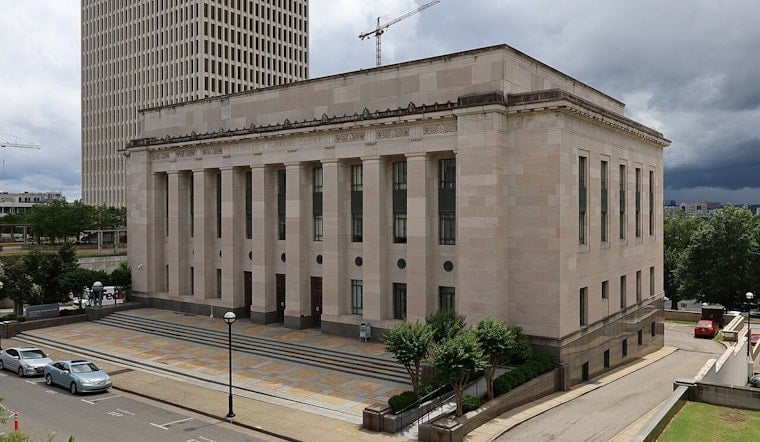
The Tennessee Supreme Court has stepped in to keep the curtain mostly closed on state executions, temporarily blocking a lower-court order that would have let journalists see more of what happens before the lethal drugs start flowing. For now, media witnesses are back to the short viewing window they have typically had, limited to the period after the prisoner is already strapped to the gurney and connected to IV lines. The ruling lands with the clock ticking on Tony Carruthers' execution, set for May 21, leaving the fight over access very much unresolved.
High Court Puts New Access Rules On Ice
With Wednesday's stay, the justices restored the long-standing setup in Tennessee: reporters only see the execution chamber once the inmate is restrained on the gurney and the IV lines have been placed, not the earlier prep work a trial judge had ordered opened to public view. The Supreme Court's order stays in effect while the media coalition pursues its appeal and explicitly governs what reporters will be allowed to see if Carruthers is put to death on May 21, according to The Associated Press.
What The Lower Court Tried To Change
Back in January, Chancellor I’Ashea L. Myles shook up Tennessee's long-standing routine with a temporary injunction that would have opened the witness-room curtains much earlier in the day. Under her order, the curtain was to go up at 10 a.m., allowing journalists to watch as prison staff applied restraints and inserted IV lines. She also required that execution-team members be offered disposable protective suits and masks so their identities would remain shielded, per the Reporters Committee for Freedom of the Press.
Myles wrote that "a meaningful and full observation of executions allows the public to assess whether the state carries out death sentences in a lawful and humane manner," a line that helped underpin her conclusion that broader media access is part of the public's right to know how the ultimate punishment is carried out.
State And Media Clash Over The First Amendment
The Tennessee attorney general's office pushed back hard, telling the Supreme Court that the media coalition has no special First Amendment right to see more than anyone else and warning that an expanded viewing window could risk outing members of the execution team and force the state to use untested procedures, according to The Associated Press.
Lawyers for the news organizations see it differently. They argue that reporters have both constitutional and statutory rights to observe executions in a way that lets them meaningfully document how the state takes a life, and they say the disposable suits and masks ordered by Myles strike the right balance by protecting staff identities while still allowing fuller oversight, as reported by WPLN News.
Inside The Protocol Reporters Cannot Watch
Tennessee's revised lethal injection protocol, adopted in early 2025, lays out a step-by-step script for how executions are supposed to unfold. It covers the preparation and administration of syringes filled with saline and pentobarbital, the signal a team leader gives to the warden, a five-minute waiting period, and the moment when blinds are closed and cameras are turned off before a doctor checks for signs of life. Those details are spelled out in court filings and in an appendix to the protocol.
The Tennessee Department of Correction announced that it had completed a review of its lethal injection procedures and that the state was returning to a single-drug pentobarbital protocol in an official release. Those materials, together with the protocol description in the court record, form the backbone of the current execution process, per court filings and the Tennessee Department of Correction.
Statute At The Center Of The Fight
At the heart of the legal battle is a short phrase in Tennessee Code Annotated § 40-23-116. The statute lists seven members of the media among those "entitled to be present" when the state carries out a death sentence, language both sides now claim supports their reading of what being "present" actually means, according to the state code text.
Courts and advocates have sparred over whether that promise of presence guarantees reporters a view of the preparatory steps or only of the moments when the lethal drugs are administered and death is pronounced. That debate plays out in briefs and legal commentary from the Reporters Committee for Freedom of the Press and in the statutory record itself (see Tennessee Code Annotated).
For now, the Tennessee Supreme Court's stay keeps the narrow viewing window firmly in place while the appeals play out. The eventual ruling will decide whether the state's tightly controlled access remains the norm or whether future executions will unfold under a more expansive, if still heavily shielded, public gaze.


