

























































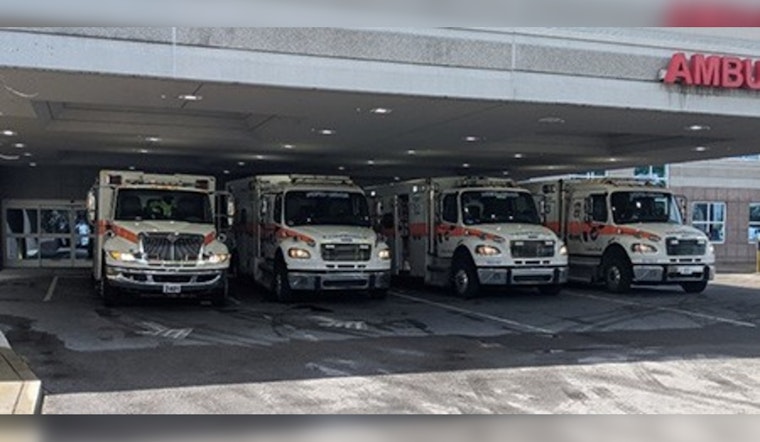
Tennessee lawmakers are taking a swing at one of the nastiest surprises in healthcare: ambulance bills that show up weeks after a 911 call and blow up a family budget. The House has moved a bill that would block out-of-network ambulance providers from slapping insured patients with balance bills for covered emergency transports, while the Senate version just hit a speed bump in committee.
The House approved a rewritten HB 1061 on Thursday, but the identical Senate companion stalled earlier in the week. The fight now is not over whether patients should be protected, but how to pay ambulance services enough to keep local EMS crews on the road.
What the bill would do
The House rewrite, filed as Amendment HA0827, would ban balance billing for covered ambulance services starting July 1, 2026. It requires health insurers to pay ambulance providers directly within 30 days of receiving a clean claim and sets a minimum payment when there is no local contract in place.
Under the amendment, that fallback rate is the lesser of the provider's billed charge or 425% of the current Medicare rate for similar services. Once the insurer pays under those rules, patients would be off the hook for anything beyond their usual copays, coinsurance or deductibles. The full details are laid out in the amendment text from the Tennessee General Assembly.
Lawmakers and local coverage
House sponsor Rep. Greg Vital (R-Harrison) and Sen. Bo Watson (R-Hixson) authored the proposal. The House adopted the amendment and passed HB 1061 on Thursday, according to the Tennessee General Assembly.
Vital framed the bill as basic 911 common sense. "When you call 911, your focus should be on getting the critical help you need, not worrying about whether the ambulance is in-network," he told WSMV.
Memphis outlets have been tracking the measure as well, highlighting the House vote and the brewing argument over how to set payment formulas. That local angle was covered by LocalMemphis.
Why supporters back it
Ambulance providers and EMS advocates say this is exactly the kind of bill patients cannot avoid. In an emergency, no one is shopping networks or scrolling provider lists, so they argue the patient should not get hit with a balance bill for something they had zero control over.
They also contend that any fix has to include a realistic reimbursement floor, or rural and local EMS services will be stuck trying to operate on the cheap. The Tennessee Ambulance Service Association lists both balance-billing protections and a payment floor as top legislative priorities for 2026.
Polling suggests Tennesseans are feeling the pain of surprise medical charges. Unexpected bills are common and ambulance charges are among the expenses residents say have blindsided them, according to survey findings from the Healthcare Value Hub.
Critics' concerns and the Senate snag
Opponents, including insurance trade groups and some lawmakers in other states, are not arguing for surprise billing, but they are wary of locking a payment floor into law. They warn that mandated minimum rates could ultimately feed into higher premiums or trigger intense legal battles over how much is owed.
Similar proposals in other states have drawn the same kind of warnings, as reported by WTVY. Those tensions help explain why the Senate companion bill, SB 1376, failed to clear the Senate Commerce and Labor Committee on Tuesday, according to the Tennessee General Assembly. With that committee vote, the Senate version is parked for now.
Supporters say they are not done yet. They plan to look for changes that can win over key senators or try to hammer out a compromise before the session wraps.
Legal remedies and enforcement
The House amendment does more than ban balance billing. It gives ambulance providers a private right to sue insurers within one year if payment disputes are not resolved. Courts would be allowed to award treble damages and reasonable attorney fees, and the state commissioner of commerce and insurance would have explicit authority to enforce the law.
Those teeth are spelled out in the amendment language from the Tennessee General Assembly. Backers say tough remedies are the only way to make sure a balance-billing ban actually sticks in the real world. Critics counter that such penalties could invite a wave of lawsuits that simply move costs around the system.
What’s next
For now, the spotlight is on Senate leadership and whether they are willing to revive the proposal in a revised form. If SB 1376 stays off the agenda, advocates say the issue could resurface in another bill or in a future session.
Federal officials have been wrestling with the same problem on a national scale, as outlined in an advisory committee report from CMS. That leaves Tennessee's effort as one piece of a larger, still-evolving patchwork.
Local EMS directors across the state say they will keep pressing lawmakers to thread the needle: shield patients from surprise ambulance bills while still keeping the lights on, the fuel tanks full and the life-saving crews ready to roll.





