

























































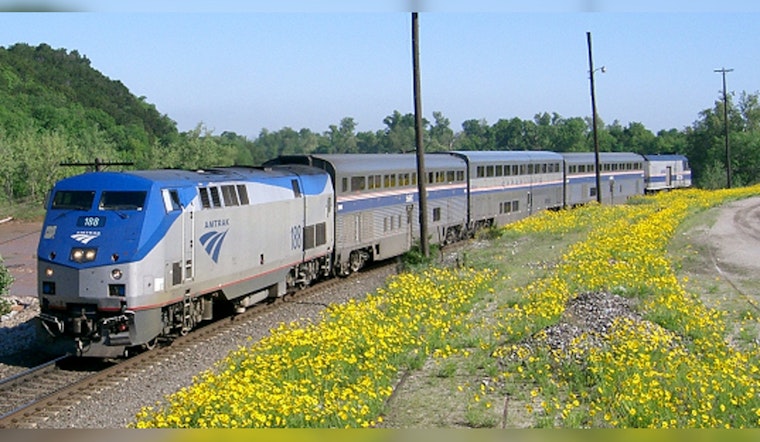
Just after sunrise at Oklahoma City's Santa Fe Depot, commuters, college kids and long-haul travelers climb aboard the Heartland Flyer for the roughly four-hour ride to Fort Worth. The daily train, Oklahoma’s only intercity passenger rail line, is still rolling thanks to a stitched-together mix of local and regional dollars after decisions in Austin blew a hole in its budget.
Route, Roots And Ridership
The Heartland Flyer, operated by Amtrak, runs once a day between Oklahoma City and Fort Worth and links passengers to the Texas Eagle and Amtrak's wider national network, according to Amtrak. Service launched in June 1999 after roughly twenty years without regular passenger trains in Oklahoma, a comeback detailed by the Oklahoma Department of Transportation and other local reporting. Regional planners and officials say the corridor carries about 80,000 riders a year, a figure cited during coverage of the funding clash by The Dallas Morning News.
Funding Fight And Local Patchwork
Under the Passenger Rail Investment and Improvement Act of 2008, known as PRIIA, shorter passenger rail corridors are treated largely as state supported routes, which means they live or die on state and local budget decisions. The latest jolt came when the Texas Legislature turned down a roughly 7 million dollar, two year funding request for the Flyer. In response, the Regional Transportation Council voted to shift 3.5 million dollars in Regional Toll Revenue to cover the Texas share for a single year, according to documents from the North Central Texas Council of Governments. Council materials describe the emergency move as a way to buy time for a ridership campaign, keep regional planning on track for major events and avoid potential federal reimbursement fallout.
A Train Of Experiments
The Flyer has not just moved people, it has doubled as a rolling laboratory. Amtrak used the route to pilot e ticketing, years before it became standard elsewhere. The train also ran on a biodiesel blend that included beef tallow as a fuel trial. "We were using biodiesel made from beef tallow to power the train as an experiment," Amtrak spokesman Marc Magliari told KGOU. That biodiesel work later earned a spot in TIME's list of notable innovations.
What Expansion Could Look Like
Even as the existing line scrapes for support, planners in Oklahoma and Kansas are trying to grow it. The Federal Railroad Administration has accepted a proposed Heartland Flyer extension into its Corridor Identification and Development program and awarded planning money to study a northern leg to Wichita and Newton. Kansas and Oklahoma are collaborating on a Service Development Plan that received federal Corridor ID backing and an initial 500,000 dollar award, according to reporting by KWCH and state planning materials. Supporters say the extension would plug several communities back into the national Amtrak network if it is eventually built.
For now, local officials, riders and small towns along the tracks are watching to see whether state legislatures restore more stable funding, whether the NCTCOG ridership push can trim subsidy needs and how Corridor ID planning will shape long term investment. The short reprieve bought with regional toll dollars gives advocates a bit of breathing room to chase those fixes, while also underscoring how precarious a daily intercity train can be when every budget season turns into a cliffhanger.





