

























































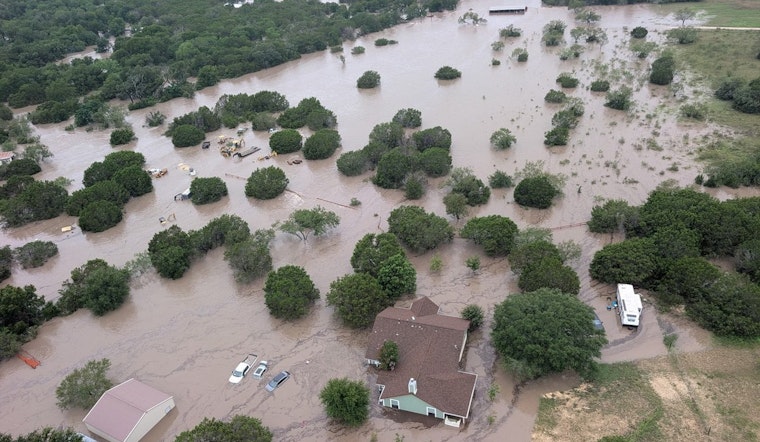
A February progress update has officially started the countdown for Harris County: up to $660 million in federal matching money for post‑Harvey flood projects is now at risk as state and federal spending deadlines come into view. Most of the construction tied to the 2018 $2.5 billion flood‑control bond still has not broken ground, which leaves neighborhoods that were promised new protections watching the calendar instead of the bulldozers. County leaders say they are rushing to finish pre‑construction work, line up contractors, pursue deadline extensions and do whatever they can to keep the grants from slipping away.
How Big Is The Exposure?
The county’s February status report flags 28 projects that rely on mitigation and disaster‑recovery grants, with delays that could put as much as $660 million in federal funding on the chopping block, according to Houston Chronicle reporting. Voters approved the bond in 2018, but the federal money was supposed to match local spending on many of those efforts, which means slow delivery could cost the county far more than just schedule bragging rights.
What The County Papers Show
Harris County documents list about $541.8 million in CDBG‑MIT mitigation funds and roughly $322 million in CDBG‑DR disaster‑recovery funds, for a total of around $863 million in federal money tied to bond projects, along with detailed spending benchmarks and milestones the flood control district has to hit. The paperwork lays out separate "spend by" calendars for the mitigation and recovery pots, which complicates everything from scheduling and procurement to environmental signoffs. According to Harris County materials, those staggered timelines are a central part of the risk calculation.
Why Projects Are Held Up
Before a single shovel can hit the ground, a long list of pre‑construction requirements has to be cleared. Federal environmental reviews, endangered‑species consultations, wetland delineations and other NEPA‑related steps all have to be completed before the county can receive an Authorization to Use Grant Funds and advertise projects for bid. The state subaward contract and related paperwork spell out those checkpoints, which means that even fully designed projects cannot jump straight to construction. Grant files point to these regulatory steps, along with staffing backlogs at federal agencies, as key drivers of the schedule, according to the Harris County Flood Control contract.
Local Reaction And Politics
Critics have wasted no time turning the update into a political migraine. Charles Blain, president of Urban Reform, told a local radio audience the situation was "an abject failure by the county" and labeled the delays "incompetence," comments aired by News Radio 1200 WOAI. County officials and project partners counter that they are wrestling with complicated grant rules, escalating construction prices and new environmental review hurdles that have stretched the original timelines.
What The Federal Rules Allow
Under federal grant rules, HUD and state administrators can close out awards or move money elsewhere if performance conditions or closeout requirements are not met, and in many cases extensions are granted only when there is a clear "good cause." Those legal and administrative guardrails are laid out in HUD rulemaking and federal guidance on grant management and closeout, which also describe when unspent dollars can be pulled back and reallocated. The Federal Register discussion of HUD’s grant closeout rules offers the underlying framework for that authority.
Who Would Lose Most
The projects that could feel the pain most quickly are those planned for lower‑income neighborhoods that took heavy damage from Harvey. County documents and local advocates point out that several mitigation projects are clustered in northeast Houston, where residents have been waiting years for detention basins, channel improvements and buyouts meant to cut their flood risk. If federal awards are de‑obligated or shifted to other communities, people in those neighborhoods could be stuck waiting even longer for work that was pitched as a fairness and equity fix, a concern Houston Chronicle coverage has highlighted.
How The County Says It Will Respond
The Flood Control District has told commissioners it is trying several approaches at once. The plan includes speeding up procurement, adding staff and preparing an extension request for the Texas General Land Office so the state can renegotiate spending milestones with HUD. A recent county memo says the district is "finalizing the extension request letter to GLO" and working with outside firms to move environmental reviews and project‑management tasks along more quickly in an effort to protect the federal awards. Those steps are detailed in the district’s program files and related Harris County documents.





