

























































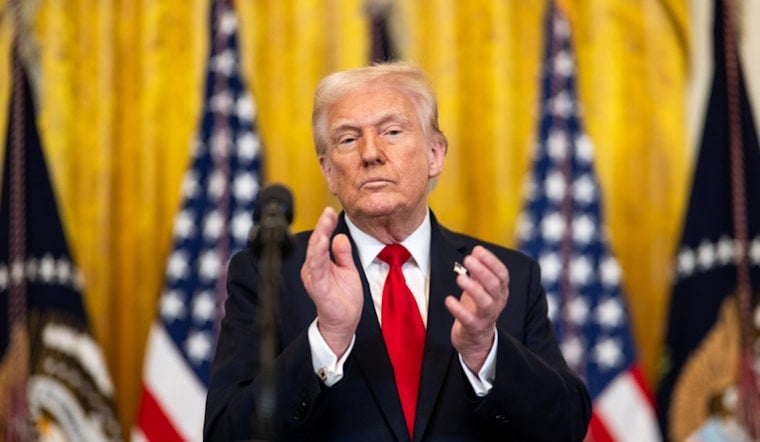
President Trump pulled top oil and gas executives into a closed-door White House meeting on Tuesday, huddling over how to handle an Iran standoff that is tightening global supplies and nudging energy prices higher. The session brought together industry chiefs and senior aides to kick around short-term market shocks and possible policy tools, all against a backdrop of rising pump prices and mounting political pressure in Washington.
According to Reuters, which cited an Axios report it said it could not immediately verify, the guest list featured Chevron CEO Mike Wirth, White House chief of staff Susie Wiles, Treasury Secretary Scott Bessent, and envoys Steve Witkoff and Jared Kushner. Reuters reported that Axios' account of the conversation included domestic production, progress in Venezuela, oil futures, natural gas and shipping as key topics.
Axios also quoted a White House official saying that "the president meets with energy executives frequently to get their feedback on domestic and international energy markets." Reuters noted that its summary repeated the attendees and subjects laid out by Axios, underscoring that the basic contours of the meeting line up across both outlets even as Reuters flagged it could not independently confirm the details.
Pump Pain and Politics
Average U.S. gasoline prices hit roughly $4.18 per gallon on Tuesday, based on AAA data cited by CBS News, a level that tends to focus the political mind very quickly. Axios reported that both the administration and Republicans on Capitol Hill are bracing for the fallout if those prices stick around, a likely motivator for getting industry leaders into the room now instead of waiting for voter anger to really boil over.
What the Industry Can Realistically Deliver
Analysts are not exactly promising miracles. Refinery throughput limits, shipping bottlenecks and the long lead times on new drilling mean there are few quick fixes for a global supply squeeze, according to reporting by S&P Global. Chevron's CEO has previously said his company can route more Venezuelan crude into U.S. refineries, a point highlighted in recent coverage, but those gains are incremental and depend on government approvals and the nuts and bolts of moving barrels where they need to go.
What To Watch
In the near term, keep an eye on any White House moves involving shipping waivers, releases from the strategic petroleum reserve or targeted export approvals. Those are the practical levers that could shave a bit off what drivers are paying. For now, though, Tuesday's gathering looks more like a strategy session to map out options than an instant fix for a market crunch that is being driven largely by events far outside Washington's direct control.


