

























































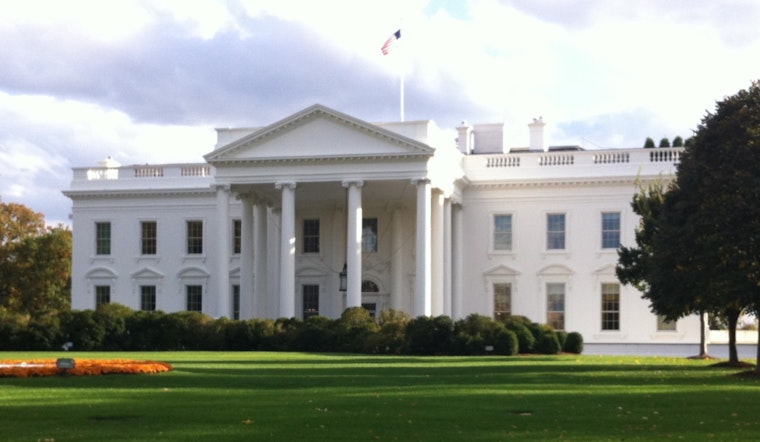
President Donald Trump signed an executive order Friday that takes direct aim at the chaotic world of college sports, telling federal agencies to get involved in transfers, eligibility and the fast-growing universe of NIL collectives, and warning that schools that refuse to play along could see federal grants on the line. The White House is pitching the move as a way to protect scholarships and preserve women’s and Olympic sports, and it lands in the middle of ongoing courtroom battles and stalled efforts in Congress to craft national NIL rules. Top conference officials, media executives and former coaches were all part of a White House roundtable in March that teed up the action.
According to The White House, the order tells the Department of Education, the General Services Administration and other agencies to “bolster the effectiveness” of rules on transfers, eligibility and pay-for-play and to decide whether violations make schools “unfit” for federal grants or contracts. It urges governing bodies to adopt clear and consistent eligibility limits, including a five-year participation window, to create more structured transfer rules and to ban “improper financial arrangements” such as pay-for-play deals run through NIL collectives. The fact sheet also calls for more data collection across college sports and asks the Federal Trade Commission and the attorney general to consider enforcement steps.
What the order would change
The package is broad, touching eligibility caps, revenue sharing meant to keep nonrevenue sports afloat, new medical-care requirements and tighter rules on agents and NIL collectives. As reported by The Washington Post, the White House has pressed for a five-year participation window and transfer limits that are supposed to tamp down roster “arms races” among the richest programs. A single federal standard, if it holds up, could shuffle how recruiting, the transfer portal and conference power balances look in the coming seasons.
Enforcement is the part that has campuses sweating. The president instructed agencies to consider pulling grants and contracts from schools that ignore the new rules, a warning that has already pushed some universities to adjust policies in other areas, AP reports. Legal experts say that sets up a likely clash with recent court decisions that expanded athletes’ transfer and NIL rights, raising the prospect of lawsuits over whether an executive order can effectively cut against federal court rulings. Attorney Mit Winter told AP that schools and the NCAA may soon be forced to choose between following court orders or the administration’s directive.
NCAA reaction and what comes next
NCAA President Charlie Baker issued a careful statement, saying the order “reinforces many of our mandatory protections - including guaranteed health care coverage, mental health services and scholarship protections,” while again calling for a permanent, bipartisan law from Capitol Hill, Sports Illustrated reports. Baker said the NCAA will keep working with Congress and the administration, but he offered no hint of an immediate legal challenge. His comments followed the March White House roundtable with conference leaders and media executives.
Actually putting the order into practice may be the hard part. Agencies are told to get moving right away, and several key sections are set to take effect Aug. 1, 2026, according to The White House. Courts have already drawn limits around how far rules on transfers and collective activity can go, and legal experts say that is a recipe for messy litigation over how much an executive order can shape the NCAA rulebook. Athletic departments and compliance offices will spend the summer deciding whether to follow the new federal push or stick with existing court interpretations, fully aware that whichever choice they make could land them in court.
Where Congress fits
Congress, so far, has not delivered the long-promised fix. The Student Compensation and Opportunity through Rights and Endorsements (SCORE) Act, which would establish nationwide NIL standards, is still pending on the House calendar, according to its entry on Congress.gov, and efforts to move it stalled late last year. With no obvious path forward, the White House is prodding lawmakers to act quickly, even as future administrations and the courts sort out how this order will be enforced. That leaves the NCAA, conferences and individual schools to decide whether to adjust their rules to match the new federal pressure or brace for possible funding fights and legal challenges.
For campuses and fans, the fallout will feel very practical. Compliance staff will have to rewrite policies, athletic budgets may be reshuffled to keep nonrevenue programs afloat, and attorneys are already predicting lawsuits that could drag through appeals for years. Whatever the final legal outcome, the order injects federal muscle into a debate Congress has struggled to resolve, and that alone is likely to change how college sports are governed.





