

























































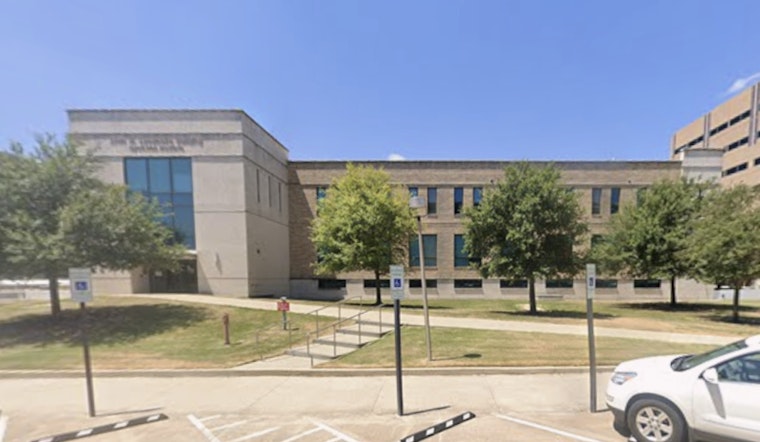
Texas is putting serious money behind one of College Station's most unassuming power players. Gov. Greg Abbott has signed off on a $13 million Texas Semiconductor Innovation Fund grant to Texas A&M University to expand the Cyclotron Institute, beefing up radiation testing that chipmakers, satellite companies and defense contractors count on before hardware heads into space or other brutal environments.
Governor @GregAbbott_TX announced that a Texas Semiconductor Innovation Fund grant of $13 million has been extended to @TAMU for an expansion of their Cyclotron Institute in College Station.https://x.com/i/status/2052488641771921741
What the Grant Will Fund
According to the Office of the Texas Governor, the $13 million award will pay for new beam lines and a "state-of-the-art spectrometer" as part of an expansion of the Cyclotron Institute's Radiation Effects Facility. Abbott is pitching the move as a way to speed up innovation across Texas' semiconductor, defense and space industries by giving them more in-state testing muscle.
Local Boost for a Global Lab
The Cyclotron Institute has spent more than 30 years running high-energy heavy-ion particle tests and has grown into a leading national site for radiation-effects work. Its client list includes NASA, SpaceX and Boeing, among others, as local coverage has noted. The Texas A&M University System Board of Regents has already voted to move the cyclotron expansion onto its capital plan, with a total $28.1 million package that folds in the $13 million TSIF award, according to KBTX.
How This Fits Into Texas' Semiconductor Push
The Texas Semiconductor Innovation Fund grew out of the Texas CHIPS Act and is run by the state's Texas CHIPS Office. The fund's public listing shows dozens of awards across Texas as of May 4, 2026, making the cyclotron build-out one piece of a much bigger statewide push to bulk up semiconductor capabilities. The fund has already supported workforce and fabrication projects around the state, a sign that Austin is treating testing and validation as core pieces of the supply-chain puzzle, per the TSIF public listing from the Office of the Texas Governor.
Timeline and Local Impact
The Texas A&M System says regents have approved scope and budget changes that will add square footage to the Luedecke Building, which in turn should increase the institute's testing capacity. System officials say work is expected to move ahead this year as part of the $28.1 million package and that the expansion will mean more high-tech jobs plus additional hands-on research options for students, according to Texas A&M System news.
Where to Learn More
For the fine-grain details and how to book beamtime, the institute keeps local instructions and contacts on its Radiation Effects Facility page. Check the Cyclotron Institute site for specifics, and see the embedded state announcement above for the official rundown on the grant.





