

























































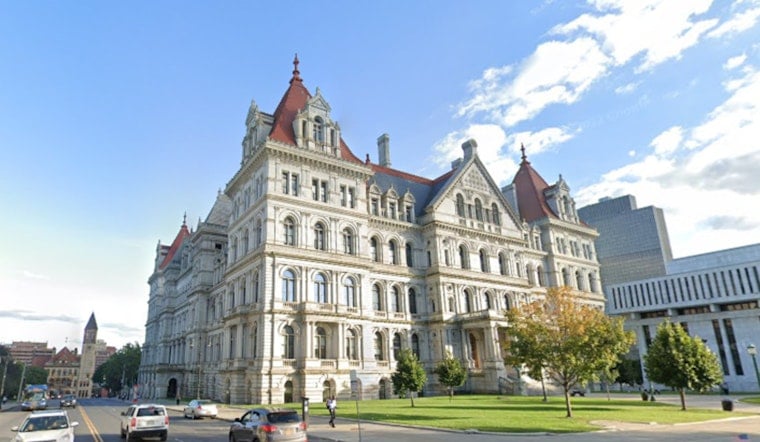
The fight over New York's data center boom landed squarely in Albany on Wednesday, when lawmakers, advocates and nearly 100 residents rallied at the state Capitol behind a bill that would hit pause on new large facilities for three years. Backers say the break is needed so regulators can fully examine how these so‑called factories of the cloud affect the power grid, water supplies, land use and nearby neighborhoods. Critics counter that a moratorium could scare off investment just as developers are lining up massive projects, including a proposed 2.2‑million‑square‑foot campus in the rural town of Alabama, New York.
According to Spectrum News, nearly 100 demonstrators joined lawmakers and community leaders for the Capitol rally. Cheryl Cordes, who lives in Alabama, N.Y., told reporters she wants officials to "stop giving tax incentives to billionaires to pollute our communities." Sen. Kristen Gonzalez, who chairs the state Senate Internet and Technology Committee and co‑sponsors the bill, framed the push as part of a broader reckoning with tech infrastructure, saying "this fight is bigger than just individual data centers."
What's in the bill
The legislation, Senate Bill S9144, would block state and local agencies from issuing new permits for data centers capable of using 20 megawatts of power or more until the Department of Environmental Conservation adopts regulations and the Public Service Commission completes required actions. It calls for a generic environmental impact statement that looks at electricity and water use, noise and land‑use changes, and directs the PSC to study how data centers could affect monthly electricity and gas rates for different types of customers.
Sponsors point to projections that data center power demand in New York could grow by more than 9,000 megawatts, roughly double current household electricity use, as a key reason to slow approvals. The bill text spells out the moratorium rules and timeline in detail, as posted by the New York State Senate.
Big project in Western New York
Front and center in the debate is a proposed Stream Data Centers campus at the Western New York STAMP site in Genesee County, a three‑building, 2.2‑million‑square‑foot plan that developers have pegged at about $19.4 billion, according to The Real Deal. The developer has already filed site plans and requested tax breaks as the Genesee County Economic Development Center moves through public hearings, while neighbors flag potential water use, strain on the grid and round‑the‑clock noise.
County documents place the STAMP site on Crosby Road in the town of Alabama, and confirm the project's footprint and layout at the industrial park, according to filings from the GCEDC. For residents like Cordes, the STAMP fight has become the most visible symbol of a broader clash over where and how the state should host energy‑hungry data facilities.
Industry pushes back
Industry groups argue that a blanket, statewide pause would undercut economic‑development efforts and send data center builders to friendlier states. Khara Boender, director of state policy for the Data Center Coalition, told Spectrum News that rising energy costs are driven by many factors, including grid upgrades and extreme weather, not just data centers. She warned that a three‑year halt could be read as a message that such projects are "not welcome" in New York.
The Data Center Coalition is pushing instead for more targeted planning and direct engagement with companies. The group's state policy team has been a regular presence at hearings and in committee rooms, as outlined by the Data Center Coalition.
Local pushback spreads
The drama in Albany mirrors smaller‑scale fights in towns across the state, where residents zero in on noise, heavy water use and the fear of higher utility bills. In Central New York, the Lysander Town Board voted in early May to impose its own six‑month moratorium after a packed public hearing and petition drives opposing a proposed 300‑megawatt data center campus.
According to WAER, that local pause has been held up by policy watchers as part of a growing wave of municipal moratoria and zoning reviews aimed at giving communities breathing room before big projects move into formal county or state review.
Legal and regulatory consequences
If S9144 becomes law, it would amend the state Environmental Conservation Law and add a new public‑service provision that instructs the PSC to study rate and reliability impacts and directs the DEC to prepare a generic environmental impact statement before new permits can be issued. Supporters say that kind of front‑end analysis is necessary to protect ratepayers and natural resources. Opponents counter that the additional layers of review could tie up projects and jobs while the studies play out.
The legislation sketches out exactly which facilities would trigger the moratorium and the procedural steps that agencies must complete before lifting it. The full language is available from the New York State Senate.
What to watch next
All eyes now turn to committee calendars, where hearings, draft DEC studies and PSC filings could stretch out over months if the bill advances. The timing will decide whether specific projects stall or keep moving through the permitting pipeline.
New York's proposal is part of a broader national push to rethink the pace of data center growth as states juggle grid reliability, climate targets and economic‑development promises. As reported by TechCrunch, lawmakers elsewhere are experimenting with their own moratoria and stricter review regimes, setting up a state‑by‑state test of how far to go in reining in the cloud.





