

























































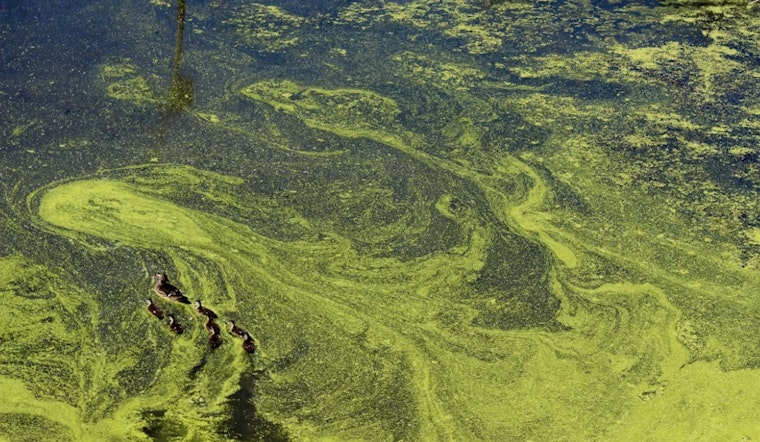
A popular Portage lake has suddenly turned from summer playground to caution zone. Kalamazoo County officials issued a public-health advisory yesterday after preliminary testing detected the algal toxin microcystin in Austin Lake. People are being urged not to swallow lake water and to steer clear of any surface scums or bright blue-green sheens. Pet owners are told to keep animals out of the water and to rinse them with fresh water if they come into contact with suspicious-looking areas.
According to Kalamazoo County Health & Community Services, initial samples from Austin Lake tested positive for microcystin and the State of Michigan Bureau of Laboratories will perform confirmatory testing. The advisory highlights visual warning signs such as blue-green scum or a paint-like sheen on the surface and instructs people and pets to avoid any water that looks off. Local coverage of the detection is available via MLive.
How To Stay Safe On The Water
Public health guidance is straightforward. Stay out of water that looks like spilled paint, thick foam, or mats of scum, and do not swallow lake water under any circumstances. The U.S. Environmental Protection Agency notes that microcystins can cause skin irritation, gastrointestinal illness, and respiratory symptoms in people, and recommends rinsing off with clean water after any possible exposure. Boaters are advised to avoid driving through surface scums and to keep children and dogs away from any suspicious patches.
Symptoms And Danger To Pets
Health agencies say people exposed to harmful algal toxins can develop rash, vomiting, diarrhea, headache, and breathing problems. More serious exposures can affect the liver or nervous system. The Centers for Disease Control and Prevention reports that animals, especially dogs, often show signs of illness quickly and may experience vomiting, staggering, excessive drooling, convulsions, or worse. Contact a veterinarian immediately if you suspect your pet was exposed. If you or your pet develop concerning symptoms after lake contact, health officials advise seeking medical or veterinary care and reporting the illness to public-health authorities.
Who To Call And What Comes Next
People with questions about the advisory can contact Kalamazoo County Environmental Health at 269-373-5210. For poisoning emergencies, the national Poison Control line at 1-800-222-1222 can provide immediate guidance while confirmatory testing is completed.
Why Blooms Are Popping Up More Often
Experts point to a combination of warmer water temperatures and nutrient runoff that fuels cyanobacteria as key drivers behind the rise in harmful algal blooms across Michigan. Michigan Sea Grant has been tracking when these blooms tend to form and offers tips for recognizing them and cutting down on runoff at the watershed level.
Officials say they will update the public as confirmatory lab results come in. Until then, residents and visitors are urged to treat scummy or bright blue-green water as potentially dangerous. Keep pets and kids away from suspicious areas and watch county news releases or local reporting for the latest information.



