

























































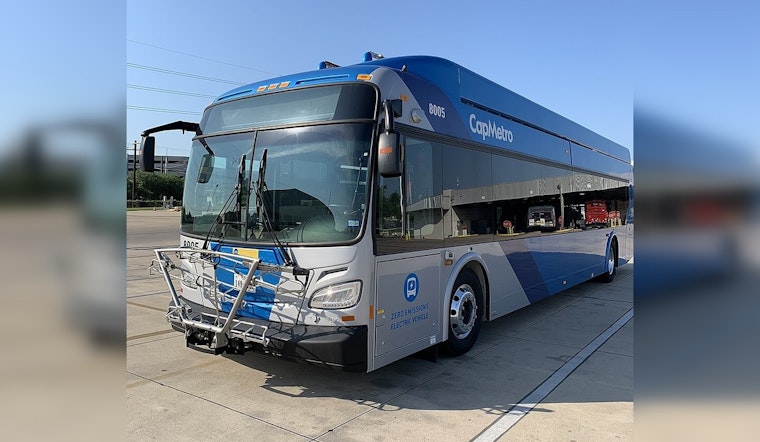
Austin’s big swing at an all-electric bus fleet has hit a snag, with a chunk of battery-powered coaches sitting idle and schedules quietly reshuffled. Riders can expect to see a rotating cast of diesel, hybrid, and battery buses on routes that were supposed to go all-electric while Capital Metro sorts out warranty questions, parts shortages, and charging bottlenecks.
What the agency told reporters
CapMetro told local media on Monday that it has put a pause on rolling additional battery-electric buses into daily service and is moving to buy hybrid buses as a temporary bridge, using money planned in its fiscal year 2027 capital budget, according to KVUE. The station reported that staff are lining up technical consultants and more maintenance capacity so the agency can get more electric vehicles out of the yard and back on the street.
Official filings show CapMetro now has about 104 battery-electric buses in its inventory, or roughly a quarter of its approximately 479-coach fleet, according to CapMetro. That report and local coverage indicate that around half of those electric buses are typically unavailable for service at any given time. The zero-emission group includes 58 New Flyer buses and 46 Proterra-built buses, and the agency has leaned on the New Flyer models while the Proterra units stay parked.
Why the Proterra buses are sidelined
CapMetro moved its 46 Proterra ZX5 buses into storage after Proterra’s bankruptcy and the sale of its bus business to Phoenix Motor Inc. scrambled warranty coverage and parts support, agency officials told FOX 7 Austin. The Federal Transit Administration has also issued a safety advisory about certain Proterra and Phoenix vehicles that flagged electrical-circuit overheating in some earlier models, which has made agencies more cautious about putting those coaches into heavy rotation; the FTA advisory is publicly available.
Charging bottlenecks and limited duty
CapMetro officials and local reporting say another major constraint is the lack of end-of-line chargers at park-and-rides and depots, which keeps the battery buses from handling long, all-day assignments. Austin Monitor and other outlets report that the agency has New Flyer buses running in shorter, roughly eight-hour service blocks until charging infrastructure at route endpoints and depots catches up.
Hybrid buses and the FY2027 pivot
As a stopgap, CapMetro told KVUE it plans to buy 37 hybrid electric buses, which the agency says will be roughly 25% more fuel-efficient than the diesel coaches they replace, and to pay for them from its FY2027 capital program. The FY2026 budget and five-year capital plan show bus and paratransit capital lines in the FY2027 column that could cover those replacements, and the agency is presenting the hybrids as a temporary measure while the all-battery program settles down, according to CapMetro.
What riders will notice
In practice, that patchwork approach means some routes that were supposed to showcase full zero-emission service will instead see diesel or hybrid buses for now. Local coverage has noted that CapMetro is openly choosing to prioritize reliable service over promising all-electric corridors it cannot consistently operate. The agency says that tradeoff is necessary if it wants to avoid canceled trips and keep up with demand, and KUT reports that CapMetro is explicitly trying to balance long-term emissions goals with short-term reliability.
CapMetro's next steps
Agency leaders say they are taking what they call "calculated steps" that include installing end-of-line chargers and testing and conditioning parts, and they are exploring options such as hybrids and hydrogen to plug service gaps, according to meeting minutes. CapMetro records also show Operations Chief Andrew Skabowski warning that the agency will not "burn warranty" while it works to stabilize the fleet, and describing work with New Flyer and outside advisers to get more buses into dependable service.
CapMetro says its long-term target is still a reliable, lower-emissions bus system, only on a timeline that tracks with parts availability and charging infrastructure instead of ideal rollout dates. Riders can keep an eye on route changes and service alerts on CapMetro as the agency rides out the transition.




