

























































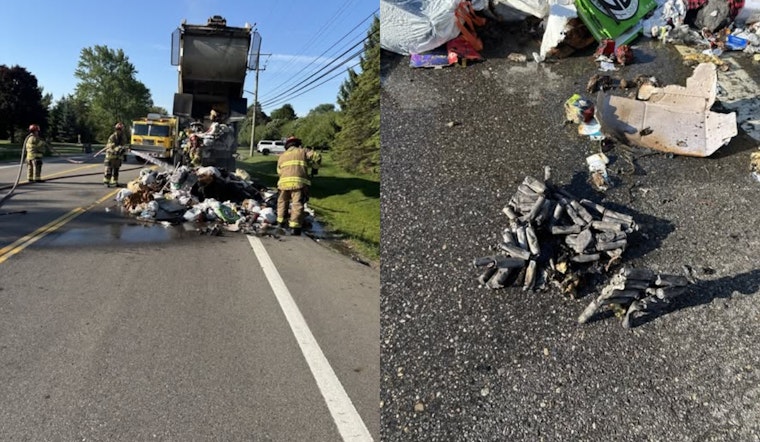
Morning traffic on Livernois got a rude surprise today when a Troy garbage truck caught fire, prompting a fresh warning about lithium-ion battery disposal from the Troy Fire Department. Officials say the driver dumped the burning load onto the roadway at about 8 a.m. to keep the flames from overtaking the truck, and firefighters later found a lithium battery pack in the charred pile. The department posted photos of the blackened debris on social media to drive home just how fast one bad battery can turn into a street-side inferno.
In a Facebook post, the department wrote, "Lithium-ion batteries should never be thrown in the trash," stressing that damaged or improperly discarded batteries can ignite and trigger serious fires in garbage trucks, homes, and recycling facilities. As reported by WXYZ, the department said the truck operator dumped the burning load onto Livernois to keep the blaze from spreading.
Where to drop old batteries in Troy
Residents in Troy who are cleaning out junk drawers and garages can safely unload dead batteries and other hazardous materials at the Southeastern Oakland County Resource Recovery Authority recycling drop-off center. According to SOCRRA, the Troy site at 995 Coolidge accepts household hazardous waste, electronics, and batteries by appointment. The agency instructs residents to use its online scheduler or call ahead to confirm hours, rules, and what materials are allowed. For people outside the immediate area, The Battery Network maintains a national drop-off locator and advises users to bag batteries or tape terminals before transporting them.
Why tossed batteries can ignite
Lithium-ion cells may look harmless, but if they are punctured or crushed inside a trash compactor, they can go into thermal runaway, releasing intense heat and flaming gases that spread quickly through a tightly packed load of waste. According to EPA data from a 2021 analysis, there were 245 fires at 64 U.S. waste facilities between 2013 and 2020 that involved these batteries, leading to injuries, disrupted service, and major financial losses. The agency notes that sorting equipment and heavy compaction used throughout the waste stream make lithium-ion batteries particularly dangerous when they end up in regular trash.
How to prepare batteries for recycling
To cut down the risk of sparks, experts recommend covering battery terminals with tape or placing each loose battery in its own plastic bag, keeping higher energy packs like e-bike batteries separated, and never setting rechargeable lithium batteries out with curbside trash. The Battery Network specifically instructs consumers to bag or tape terminals and to use its locator tool to find safe collection sites nearby. Michigan’s Department of Environment, Great Lakes, and Energy directs residents to EPA guidance and state resources for more safety tips and local disposal options.
If you notice smoldering trash or a smoking load, the EPA’s incident review advises moving to a safe distance and calling 911 so firefighters can respond. For non-emergencies or to set up a safe drop-off, residents can contact SOCRRA or use The Battery Network drop-off locator to find retail or municipal collection options in the area.





