

























































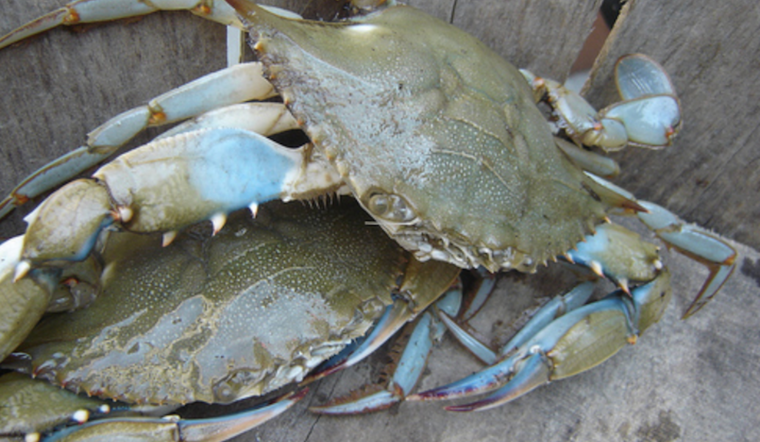
Chesapeake Bay’s blue crab fishery, long treated as the backbone of Maryland’s waterfront economy, is flashing fresh warning signs. Scientists say far fewer young crabs are surviving long enough to replenish the adult population, and a sweeping draft stock assessment delivered this spring is raising eyebrows just as the 2026 crabbing season gets rolling. For watermen and waterfront businesses, the strength of next year’s harvest now hangs on what that review ultimately confirms or revises.
Draft stock assessment raises red flags
Michael Wilberg of the University of Maryland Center for Environmental Science led a new draft stock assessment, 282 pages long, that was presented to the Chesapeake Bay Commission earlier this month. The committee’s technical review is laid out in meeting documents from the Chesapeake Bay Program. According to those materials, the assessment rebuilds the models managers use to estimate how many juvenile crabs survive and what factors have the biggest impact on that survival.
Recruitment has fallen sharply
The assessment team reported that “recruitment,” the number of juvenile crabs that survive long enough to enter the fishery, has dropped by roughly 50 percent between a peak in 2010 and 2023. It is a big enough decline to force managers to rethink how many crabs the Bay can realistically support, according to WBOC. State winter surveys put the Bay’s total blue crab population at about 238 million last year, one of the lowest counts in decades, according to the Virginia Institute of Marine Science. Since blue crabs are short-lived and rely on strong year-to-year reproduction, several seasons of weak recruitment in a row can quickly spell trouble for the fishery.
Predators explain part of the fall, not all
Models in the draft assessment point to predators as one piece of the puzzle, with invasive blue catfish called out in particular. Reporters who reviewed the work noted that researchers estimate blue catfish consumed roughly 8 percent of the Bay’s young crabs in 2023, a hit that may account for nearly a fifth of the juvenile decline, according to The Baltimore Banner. At the same time, a new 37-year field study published in the Proceedings of the National Academy of Sciences found that cannibalism by larger blue crabs is the dominant source of juvenile deaths in mid-salinity waters, complicating any effort to point to a single main culprit (PNAS).
Watermen and managers react
Watermen who work the Bay for a living are urging officials not to slam on the regulatory brakes based on early model runs alone. One longtime harvester, Robert T. Brown, told reporters that in some years, crabs can suddenly reappear “like it rained ’em,” according to The Baltimore Banner. Maryland’s blue crab program manager at the Department of Natural Resources has said the draft assessment provides “significant new information” and that state officials will work with scientists and watermen before putting any policy changes on the table. With both scientific uncertainty and livelihoods on the line, regulators are signaling a cautious approach.
Regulatory outlook
The Bay’s recent past shows how fast the rules can shift when managers conclude the population is in real trouble. After record low years in the 2000s, Maryland and Virginia rolled out female-focused protections in 2008, including bushel limits and season adjustments. The Maryland Department of Natural Resources credits that package with helping blue crab numbers rebound in the early 2010s. Whether regulators now tweak seasons, gear limits, or female harvest rules will hinge on the final assessment and follow-up analyses.
Why the numbers matter
Blue crabs usually live three to four years and reach maturity fast, which means a few weak recruitment years can ripple through restaurants, picking houses, and waterfront towns in a hurry. Federal species information and state survey data indicate that managers lean on annual winter surveys for short-term harvest decisions and on benchmark stock assessments for longer-term planning. That puts the coming weeks of review, and the final report that follows, at the center of both conservation and commerce. For now, with the crabbing season underway, docks from Annapolis to the Eastern Shore are watching closely to see whether the Bay’s numbers stage a surprise rebound or simply confirm the draft assessment’s troubling trends.



