

























































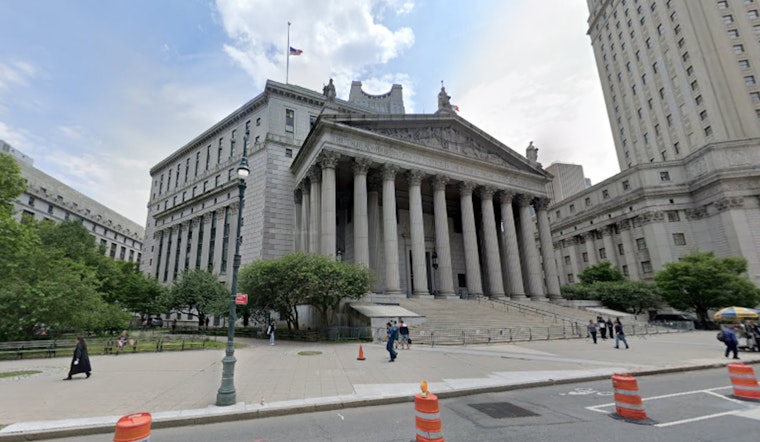
Attorneys for the family of Allan Feliz are heading to New York Supreme Court this week, asking a judge to fire Lt. Jonathan Rivera, the NYPD officer who shot and killed Feliz during a 2019 traffic stop. The case arrives in court as an Article 78 challenge filed last October, focused solely on getting Rivera terminated and not on winning any monetary damages. Supporters say the hearing will show whether a judge is willing to overturn the police commissioner’s final word in a high-profile use-of-force case.
Family Heads Back To Court
According to Gothamist, the petition claims Police Commissioner Jessica Tisch leaned too heavily on a five-year-old report from the state attorney general and did not fully weigh evidence that emerged later in the NYPD’s disciplinary process. The family’s legal team points to newly analyzed body-worn camera footage and what they describe as conflicting testimony that they say undercut Tisch’s decision to clear Rivera. City lawyers have already moved to dismiss the case, putting a procedural tripwire in front of the family before any judge reaches the substance of their claims.
What Happened In 2019
On October 17, 2019, officers pulled over Feliz’s car at East 211th Street and Bainbridge Avenue in the Bronx, saying they observed a seat-belt violation. Body-worn camera video shows officers running a warrant check on a driver’s license that Feliz handed over, which actually belonged to his brother. A struggle lasting roughly 90 seconds followed. During that confrontation, Rivera fired a single round that hit Feliz in the chest.
The Office of the New York State Attorney General reviewed the body-camera video, conducted interviews and examined medical records, then concluded there was not enough evidence to bring criminal charges. Investigators found that Rivera’s stated fear for the safety of another officer could not be disproved beyond a reasonable doubt, according to the Attorney General’s report.
Disciplinary Record
The shooting later moved into the NYPD’s internal disciplinary system. After a departmental trial, Deputy Commissioner of Trials Rosemarie Maldonado found Rivera guilty in early 2025 and recommended that he be fired, relying on witness testimony and the body-camera footage.
In 2025, Commissioner Tisch reversed that recommendation and opted not to terminate Rivera, concluding that he made a reasonable, split-second decision to protect another officer. Her written decision lays out that reasoning in detail. The department’s determination is available in an official ruling from the NYPD.
About The Lawsuit
In October 2025, the Feliz family filed their Article 78 petition asking a judge to set aside Tisch’s final ruling and order Rivera’s firing, while explicitly declining to seek financial compensation. That filing is described in a press release from the Center for Constitutional Rights.
The lawsuit argues that Tisch improperly sidelined evidence that came out during the NYPD trial phase and instead leaned too heavily on the earlier state attorney general report. Civil-rights groups, including LatinoJustice and the Justice Committee, are backing the family’s effort to overturn the commissioner’s call.
Legal Roadmap
An Article 78 proceeding is a state court mechanism designed for relatively quick judicial review of government agency decisions. Judges can throw out agency actions that are arbitrary, capricious, unlawful or beyond the agency’s authority, although they typically do not award broad money damages in this type of case.
Legal practitioners note that Article 78 cases move on a streamlined record and can end in a range of outcomes, from dismissal of the petition to a court order directing the agency to revisit its decision, depending on what the judge finds. A basic overview of the process is available from the Murtha Law Firm.
Reaction And What Comes Next
Feliz’s relatives and allied elected officials have repeatedly rallied outside 1 Police Plaza, urging the NYPD to fire Rivera and blasting Tisch’s reversal. The decision left the family “completely hurt,” brother Samy Feliz said, as previously reported by NY1.
Police unions, for their part, have lined up behind the commissioner’s decision, arguing that department leaders need to stand with officers who make rapid choices during volatile encounters, as Gothamist noted. The legal fight now hinges on whether the judge allows the Article 78 petition to survive the city’s dismissal bid and move into a full review of the NYPD record.
If the case clears that hurdle, the court could go as far as ordering the department to impose Maldonado’s recommended penalty or send the matter back for additional discipline. Outcomes like that are rare and would test just how much influence judges can wield over NYPD discipline. The family’s attorneys say they plan to press the record and ask the court to recognize what they call new evidence that Tisch overlooked. A ruling could come on the written motions alone or after an expedited hearing, at the judge’s discretion.



