

























































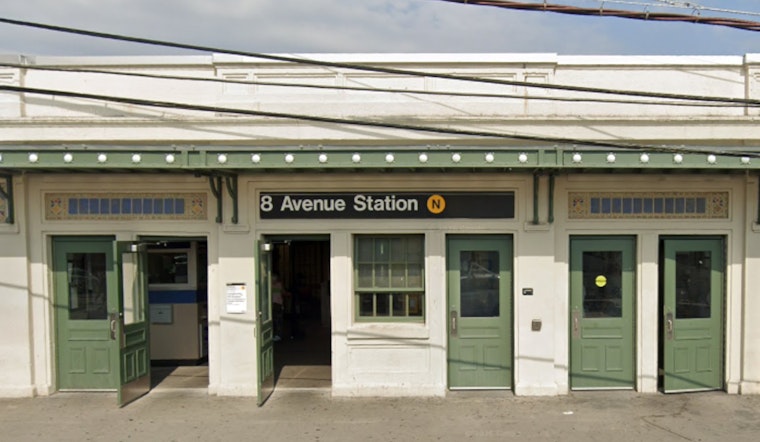
A private security guard hired to crack down on fare evasion at Brooklyn’s Eighth Avenue subway station is now out of a job after surveillance cameras allegedly caught him taking cash to buzz riders through and using what investigators say was a stolen Department of Education OMNY student card.
The Office of the MTA Inspector General reviewed the footage, confirmed the conduct in a formal report, and the guard has since been removed from all MTA property, according to the official review and subsequent reporting. The case lands right in the middle of the agency’s expensive battle against fare evasion and growing scrutiny over how it supervises contracted guards.
Investigators say they got a tip in July 2024, then pulled video that showed the guard helping riders skirt the fare on at least five occasions between July 14 and July 18, 2024. In some clips, he appears to accept cash before buzzing people through gates. In others, he appears to use the DOE student OMNY card to tap riders in.
The guard had been hired on June 3, 2024, to work gate security for Allied Security Services and was assigned to the Eighth Avenue station. He was removed from that post after the probe. Those findings were detailed in an inspector general report and later covered by New York Post reporting.
Inspector General Review
The Office of the MTA Inspector General examined station surveillance footage along with internal agency records, then forwarded its findings to New York City Transit for follow up. The watchdog office has repeatedly uncovered cases where employees or contractors diverted fares or helped riders bypass payment, and it can recommend both discipline and policy changes when it spots a pattern.
As laid out by the Office of the MTA Inspector General, NYC Transit stopped handling cash at station booths in April 2020. That makes any cash changing hands at the gate a bright line violation, regardless of whether it is a station agent or a private guard doing the dealing.
A Costly Problem
All of this is playing out against a very expensive backdrop. Fare evasion has become a major drain on the MTA’s budget and a political hot button every time a new enforcement tactic rolls out.
The Citizens Budget Commission has pegged lost fares at roughly $918 million for 2024 and estimates that fare evasion has been costing the authority close to $900 million a year in recent periods. Those are the kind of numbers that explain why the MTA has been experimenting with a mix of private security and new technology at station entrances, and why a single guard allegedly turning the gate into a side hustle drew such quick attention.
Legal And Personnel Fallout
According to the inspector general’s summary, as reported by the New York Post, the guard’s behavior “would likely constitute petit larceny.” Investigators, however, did not refer the case for criminal prosecution.
Allied Security Services declined to comment to reporters. An MTA spokesperson told the New York Post that the guard “will never work on MTA property again.” For now, the employee is off subway duty while the contractor and the transit agency work through whatever administrative or contractual steps come next.
What Comes Next
Advocates and neighborhood groups are expected to keep the pressure on, arguing that this case exposes weak spots in how the MTA screens and supervises private guards. They are likely to push for stronger oversight of contractors, tighter hiring and training standards, and faster upgrades at high evasion stations, where better gates and clearer procedures could make it harder for anyone to quietly sell access.
The inspector general’s office, which investigates fraud, waste and abuse in the transit system, can only recommend solutions. The next move is up to transit leadership, which will have to decide whether the answer is tougher contractor controls, more technology at the turnstiles, or some mix of both.




