

























































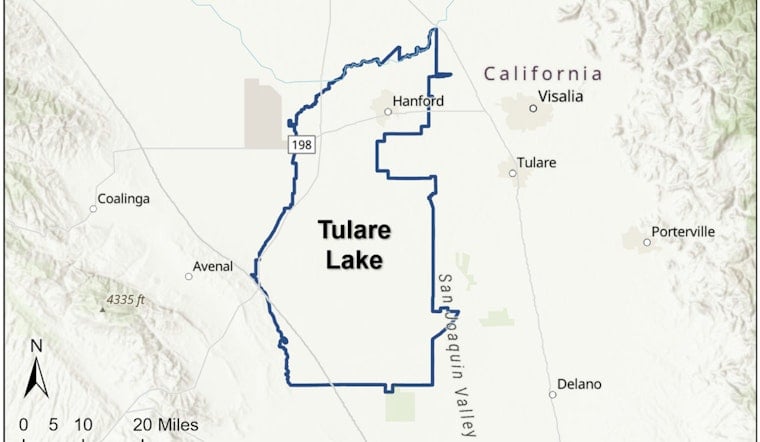
For the first time, growers across a huge stretch of the San Joaquin Valley — from Corcoran to Pixley and the old Tulare Lake bed — have had to tell state regulators exactly how much groundwater they pumped by a hard May 1, 2026 deadline. The requirement flows from the State Water Resources Control Board’s 2024 decision to put the Tule and Tulare Lake subbasins on probation after concluding local plans were not stopping chronic overpumping.
State Orders Reporting, Fees and GEARS Signup
Under the board’s new reporting program, pumpers in probationary areas must register and file extraction reports through the state’s Groundwater Extraction Annual Reporting System (GEARS). They are now on the hook for an annual base filing fee of $300 per well plus $20 per acre-foot pumped; de minimis household wells are broadly exempt, according to the State Water Resources Control Board.
The board set the first reporting window to cover July 15, 2024 through June 30, 2025, with reports due May 1, 2026, and warned that late filers face automatic penalties. The rules also require larger extractors and wells near the Friant-Kern Canal subsidence area to install and use meters, and pumpers must register and submit reports through the state’s GEARS portal at GEARS.
Data Shows Deep Losses and Sinking Ground
State estimates cited in reporting show the two basins together lost about 213,000 acre-feet of groundwater in 2025 and that more than 2,000 landowners were asked to report their pumping by the May 1 deadline. Parts of the Tulare Lake and Tule areas have subsided by more than 6 67 feet since 2015, which has damaged infrastructure and threatened domestic wells, as reported by the Los Angeles Times.
State water-board staff and local agencies say the new data are meant to pinpoint where overpumping is causing the worst harm and to guide cost-sharing and repair plans. “You can’t manage what you don’t measure,” said Natalie Stork of the state water board, a line that has become a touchstone for the new reporting push.
Canal Damage and Repair Costs
The sinking is undercutting a critical supply line: repairs to a badly damaged 10-mile section of the Friant-Kern Canal have so far run roughly $326 million, according to reporting in the Fresno Bee. That price tag, and the risk of further subsidence, help explain why state officials say they need extraction data to pin down who benefits and who should pay for repairs and mitigation.
How Farmers Are Reacting
Grower groups and many farmers have pushed back, arguing the timing and cost of the new rules are harsh during a period of depressed crop prices. Garrett Gilcrease, president of the Kings County Farm Bureau, told the Los Angeles Times that filing through the state’s system was cumbersome and tricky, and warned that fees and compliance costs could imperil smaller operators. At the same time, larger landowners including J.G. Boswell Co. and Sandridge Partners are now subject to the first round of state data collection.
Legal Fight and Next Steps
The Kings County Farm Bureau challenged the Tulare Lake probation and sought an injunction against state action; appellate opinions show the early injunction was later reversed and the litigation remains active in the courts, as summarized by Justia court records. The case, and the invoices the board will send to pumpers, will be the two things to watch next: they will determine whether local agencies can stave off tighter state controls or whether the board steps in with interim limits and allocations.
For Central Valley communities that rely on shallow wells, the reporting era means a new tally of who is pumping and whether there is enough left to keep taps running. The months immediately after May 1 will show how this first wave of data reshapes local water decisions.





