

























































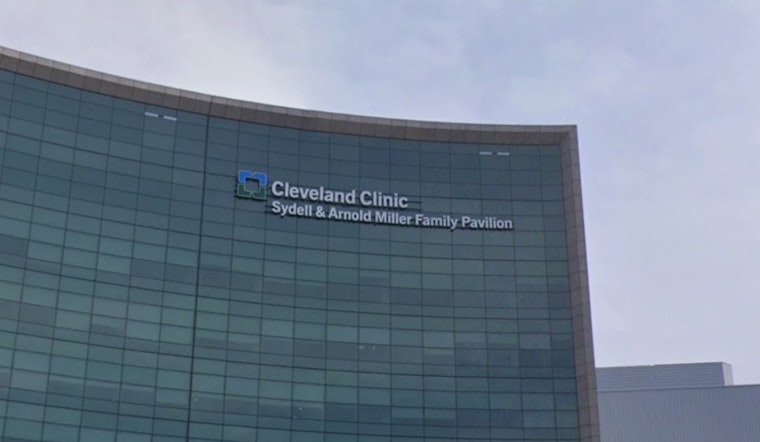
Cleveland is officially in the space health game. The Cleveland Clinic has launched a new Space Health Center inside its Heart, Vascular & Thoracic Institute, aiming to understand what space travel does to the human heart and to care for people heading beyond Earth's gravity. The effort pulls clinical care, lab research and education under one umbrella, at a moment when missions are getting longer and commercial spaceflight is picking up speed. Clinic leaders say what they learn in orbit could pay off for some of the sickest heart patients back home.
Cardiac electrophysiologist Dr. Kenneth A. Mayuga will lead the new center. "Our hope is to better understand these challenges," he said, while institute chief Dr. Lars Svensson added that the work "will provide us insights that could help us move care forward," according to Cleveland Clinic. The Space Health Center is designed to keep research, patient care and training tightly linked under one roof.
Spaceflight strains the cardiovascular system
Life without gravity is no spa day for the circulatory system. In microgravity, blood shifts toward the head, cardiac loading changes, and over time the heart's shape can be altered. Those shifts may help trigger arrhythmias and set astronauts up for low blood pressure and orthostatic intolerance once they are back on solid ground. A recent systematic review in American Heart Journal Plus flagged concerns about venous thromboembolism in microgravity and stressed that there is still very little evidence on how to prevent or treat blood clots in space.
Training pipeline and local partnerships
A grant from the Center for the Advancement of Science in Space, which manages the ISS National Laboratory, will support a one-week Space Medicine Education for STEM Inspiration (Space MedEd) course this summer at Cleveland Clinic Research and the Lerner College of Medicine. NASA Glenn will send guest lecturers and host an on-site visit, and the program is set to introduce doctoral, medical and postdoctoral trainees to careers in space medicine, according to Cleveland Clinic. Organizers say hands-on exposure and cross-institution partnerships with the International Space University and local universities are meant to build a long-term pipeline of clinicians and researchers.
Cleveland's mix of a major academic medical center, nearby NASA research facilities and university partners positions the region to carve out a bigger role in the growing field of space medicine. Clinic officials plan to recruit trainees for the summer course and launch clinical and translational studies that could shape astronaut screening, in-flight monitoring and postflight rehabilitation, and, they argue, ultimately yield new tools for treating heart disease on Earth.



