

























































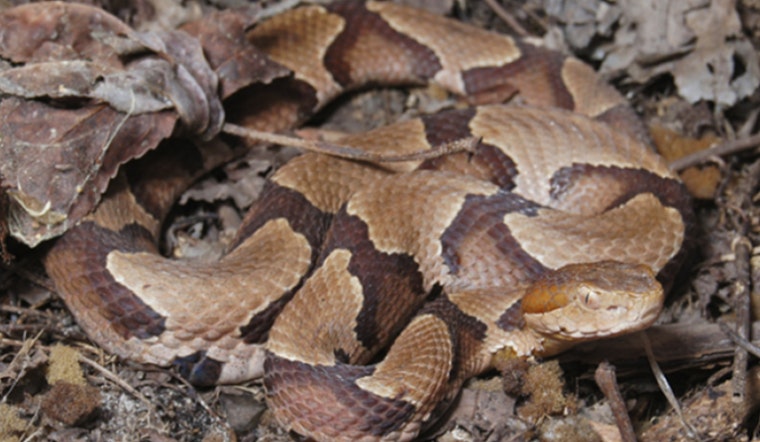
Snake season has arrived across North Carolina, and the copperhead, the state's most commonly encountered venomous snake, is already turning up in yards, gardens, parking lot plantings and along trail edges. Biologists say these well camouflaged pit vipers regularly wander into human spaces, which means a surprise encounter is more likely than many residents would like to believe.
According to the N.C. Wildlife Resources Commission, copperheads are the most common venomous snake in the state and probably account for over 90 percent of North Carolina's venomous snakebites. The commission reports that copperheads frequently use rock faces, dense ground cover and piles of logs or sawdust for shelter, situations that can put them right up against homes and yards.
When and where you're most likely to see one
Copperheads become more active once temperatures rise above about 60°F and are often on the move and hunting at night, wildlife extension biologists say. As The News & Observer has reported, that behavior helps explain why the snakes so often show up in mature suburban landscaping, unmowed parking lot islands and along the edges of trails.
Make your yard less inviting
Some basic yard work can cut down on close calls: mow regularly, trim low shrubs and remove bird seed or pet food that attract rodents, which copperheads eat. The N.C. Wildlife Resources Commission and university extension staff also recommend keeping wood and other debris off the ground, and wearing gloves and checking carefully before reaching under brush or into piles.
If someone or a pet is bitten
If a bite leads to trouble breathing, facial swelling or loss of consciousness, call 911 right away. For other suspected venomous bites, contact North Carolina Poison Control at 1-800-222-1222 for immediate guidance. Poison control advises washing the area, removing tight jewelry, keeping the limb still and at heart level, and getting to a medical facility, while warning against cutting the wound, trying to suck out venom or applying a tourniquet.
How common are bites and how dangerous are they?
Reporting by WUNC notes that North Carolina Poison Control documented more than 600 venomous snakebites in 2025, with the vast majority attributed to copperheads. Emergency medicine physicians cited by WUNC say hospitals treat roughly 10,000 snakebites a year in the United States, with only a handful resulting in death, so experts stress getting prompt medical evaluation and staying as calm as possible after a bite.





