

























































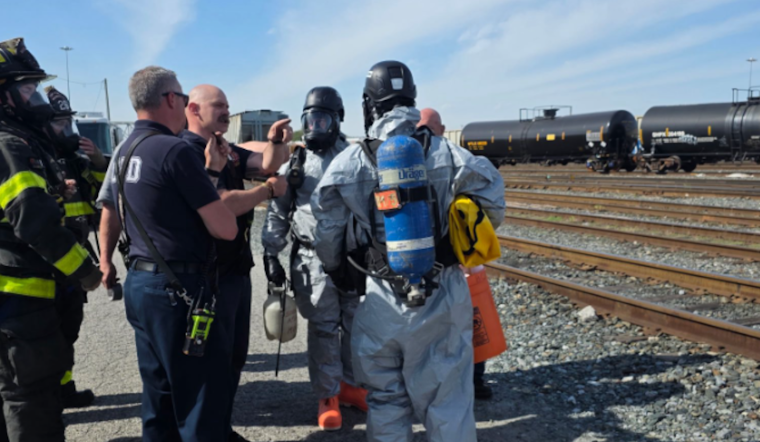
Just before 3:30 p.m. Tuesday, a routine afternoon in Curtis Bay turned tense when CSX reported a hydrochloric acid leak from a railcar in the 800 block of Chesapeake Avenue near 9th Street. Baltimore City Fire Department crews rushed in, and HazMat teams moved quickly to track down and contain the source inside the rail yard. The Maryland Department of the Environment joined them on scene, and emergency officials later said the situation was under control. There were no immediate reports of injuries.
Shortly before 3:30 p.m., the Baltimore City Fire Department received a call from CSX for a reported hydrochloric acid leak from a rail car located in the 800 blk of Chesapeake Ave. and 9th St. Upon arrival, HazMat units began to identify and contain the source of the leak.… pic.twitter.com/dADBf8Gter
— Baltimore Fire (@BaltimoreFire) May 5, 2026
HazMat Response And Official Updates
HazMat crews isolated the affected tank car and worked to control the release, according to Baltimore City Fire Department. The department said the leak was contained within the rail yard, with the Maryland Department of the Environment assisting in mitigation efforts. Officials reported no injuries and no immediate threats to nearby homes in their initial update.
Why Hydrochloric Acid Is Dangerous
Hydrochloric acid (HCl) is a corrosive solution that can release hydrogen chloride gas, which can irritate and damage the respiratory tract and, at higher concentrations, cause chemical burns or pulmonary edema, NIOSH warns. NOAA's CAMEO Chemicals database notes that hydrogen chloride can pose dangers even at relatively low concentrations and recommends using water spray to knock down vapors and steer any cloud away from people during a spill.
Local History And Community Concern
The rail facilities around Chesapeake Avenue and 9th Street have faced prior fuel and chemical issues that prompted state intervention and community criticism regarding notification and oversight, according to Baltimore Brew. Those incidents have fueled calls from residents and neighborhood groups for clearer emergency protocols at industrial sites in South Baltimore.
What Residents Should Do
If you notice a strong acidic odor or develop coughing, burning eyes, throat irritation, or shortness of breath, move into fresh air and seek medical care if symptoms do not ease, guidance from NIOSH advises. Officials say people should avoid the immediate area while crews are at work and wait for official city updates announcing an all-clear.
Baltimore City Fire Department says it will keep monitoring the rail yard and coordinating with state agencies, and officials are asking residents to stay clear of the site until HazMat gives the all-clear. We will update this article as agencies release more information.





