

























































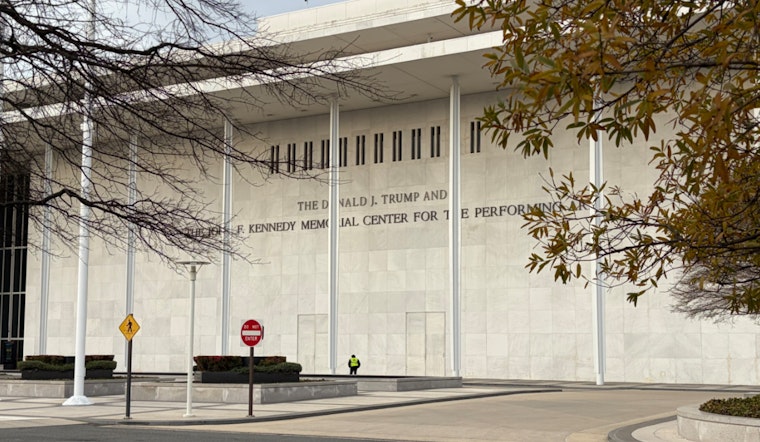
Federal Judge Christopher Cooper on Friday blocked the Kennedy Center from shutting its doors for a planned two-year renovation and halted the board’s attempt to formally fold President Donald Trump’s name into the national performing arts complex. His order keeps the institution operating as a living memorial to John F. Kennedy while still letting urgent repair work move ahead, a split decision that lands after weeks of cancellations, staffing shakeups and public outcry that have already scrambled the center’s calendar.
In a sharply worded opinion, Cooper concluded that the board “overstepped its statutory bounds” when it voted to add Mr. Trump’s name, writing that the complex “is to be named for President Kennedy, and it cannot bear any other formal name,” and emphasizing that only Congress can alter the memorial’s designation. He also blasted the board’s March vote to close the building as “ill-informed and seemingly preordained,” granting a preliminary injunction that stops the planned shutdown in its tracks. Cooper’s opinion runs more than 90 pages and lays out his findings in detail, according to CBS News.
The lawsuit that put the brakes on the renaming and closure was filed by Rep. Joyce Beatty (D-Ohio), an ex-officio trustee who argued that the board’s actions violated the Kennedy Center’s organic statute and trampled her rights as a trustee, AP reported. Cooper wrote that trustees “might have assessed the propriety of closure in a number of prudent ways. This was not one,” and found that Beatty had shown a likelihood of irreparable harm. At the same time, the court left the door open for the board to fix its procedural and informational gaps and, if it follows proper process, to revisit major decisions later.
Cooper stressed that the preliminary injunction “will not prevent the Center from moving forward with the capital repair work it has planned,” noting that the record shows the building needs significant attention even as programming has slowed, according to NBC Washington. The order pauses the abrupt shutdown that had been slated to kick in after July 4 events while the case unfolds. Kennedy Center officials said they will review the ruling and weigh their options, including a possible appeal.
How the fight reached federal court
The dispute traces back to a sweeping governance shakeup last year, when presidential appointees reshaped the board, rewrote key bylaws and moved quickly to add Mr. Trump’s name to the façade while signing off on a closure plan. Court filings collected by Justia show that Beatty’s case hinges on statutory limits in the Kennedy Center’s organic statute and on whether trustees were denied crucial information and a meaningful role before the big votes. Cooper has already ordered both sides to exchange core documents and has pressed for clearer timelines and budgets tied to the renovation scheme.
What it means for shows, staff and donors
Artists and resident companies have pulled engagements, and some donors have hit pause on support as the turmoil unfolded, leaving the center’s schedule and finances in limbo. The Washington Post has tracked the wave of cancellations and staffing changes as trustees tried to push the overhaul through. Cooper’s carve-out for immediate capital repairs lowers the risk of some short-term disruptions, but the longer-term program lineup and relationships with partners are still very much up in the air.
Legal fallout and next steps
Cooper’s ruling drives home that Congress, not a trustee vote, ultimately controls the name of the national memorial, a statutory point that sat at the heart of Beatty’s argument and the court’s preliminary decision. The injunction is not the final chapter, though. The judge wrote that the board could still decide to close the facility in the future if it “independently balance[s] its multiple obligations” and cures the procedural defects he identified, language that leaves ample room for renewed debate, appeals and more litigation. For a detailed summary and links to the court filing, see CBS News.
For now, Beatty’s lawsuit has kept the Kennedy Center open while the courts sort out the bigger legal questions. Expect appeals and fresh board deliberations in the coming weeks as politicians, artists and funders watch closely to see how the capital’s flagship cultural institution will be steered going forward. For background on the March orders that set this clash in motion, see coverage from AP.





