

























































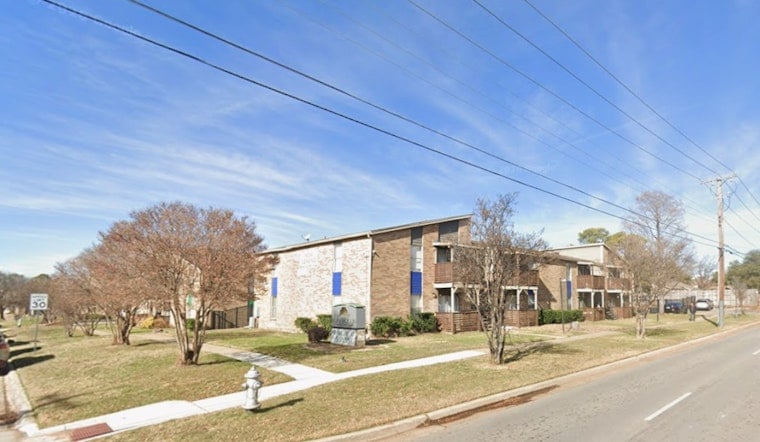
For Arlington landlord Matthew Haines, the pandemic-era eviction freeze was not just a public health measure, it was a financial gut punch. Now he and roughly 1,500 other property owners are pressing Washington for a massive payout, arguing the federal government should reimburse them for millions lost during the COVID-19 eviction moratorium.
They say the Centers for Disease Control and Prevention order effectively barred them from removing tenants who stopped paying rent, blowing holes in their balance sheets and, in some cases, forcing fire-sale decisions. With a recent federal appeals ruling keeping their case alive, settlement talks with the Justice Department are underway, setting up a rare test of whether landlords can force the government to pay for pandemic-era housing protections.
As reported by The Associated Press, Haines, who operates the Oakwood Apartments in Arlington and Irving, Texas, says the CDC moratorium cost him and investors more than $1 million. The plaintiffs as a group hope to recoup as much as $1.5 billion. According to the AP, the complaint ropes in everyone from small mom-and-pop landlords to larger firms, with some owners saying they had to sell properties, trim staff or take on emergency loans to survive. The Justice Department declined to comment on the ongoing settlement talks, the outlet reports.
Federal appeals court left claim alive
The landlords cleared a major hurdle when the U.S. Court of Appeals for the Federal Circuit declined to rehear the case en banc in an order dated June 6, 2025, leaving a prior panel ruling in place, according to the U.S. Court of Appeals for the Federal Circuit. That decision kept alive the landlords’ argument that the CDC eviction pause qualifies as a “taking” under the Fifth Amendment.
The appellate opinion concluded that, in some circumstances, an eviction moratorium can amount to a physical appropriation because it strips owners of the traditional right to exclude nonpaying tenants from their property. In other words, if the government tells you who has to stay in your building and for how long, that may look a lot like the government using your property for its own purposes. That reasoning is now front and center as lawyers on both sides debate how to calculate damages and approach settlement at the trial court level.
Landlords say the moratorium cost billions
The lawsuit paints a cascading financial disaster for many owners: months of lost rent, mounting debt, postponed repairs and, in some cases, forced sales. The complaint cites an industry estimate that landlords faced roughly $57 billion in losses during the earliest months of the moratorium. Individual owners interviewed by reporters describe scrambling to borrow money and cut staff just to keep the lights on.
"It was terrifying," one owner told reporters, recalling the experience of watching rent checks vanish while costs kept coming due. Landlords in the case argue that even well-intentioned public health measures cannot simply offload the full cost of keeping tenants housed onto property owners without triggering constitutional protections.
Researchers say moratoria kept people housed
Tenant advocates and housing researchers, meanwhile, stress why those protections existed in the first place. A recent study in JAMA Network Open estimated that homelessness rose about 11 percent in a typical state in 2022 and would have climbed to around 20 percent without eviction moratoria.
Federal officials also rolled out roughly $46.5 billion in emergency rental assistance during the pandemic. Analysts say that money reached many high-need communities while moratoria and relief programs ran side by side, helping some landlords cover at least a portion of the rent that was not coming in directly from tenants.
What happens next
With the appellate ruling intact, the fight now shifts to what really hurts: the money. The Court of Federal Claims will oversee the next phase, where the question is whether landlords will push for full-blown trials and court-awarded compensation or take a negotiated deal.
Court filings tied to Darby Development Co. v. United States and related cases lay out competing visions of how to tally the damage: lost rent, shaken investor expectations and broader business disruption that owners say rippled through their operations. Any eventual settlement or damages award will be closely studied for how it values each of those pieces and for the template it sets for future crises.
Legal implications
Attorneys watching the case say the Darby litigation could influence how courts think about takings claims when the government imposes sweeping limits on evictions. The Federal Circuit zeroed in on whether the challenged federal action was “authorized” for takings purposes, a threshold question that could invite more appeals or entice other courts to weigh in down the line.
For now, the Federal Circuit’s order and underlying opinion supply the legal roadmap for how pandemic-era damage claims will be framed and valued. Landlords will argue the government effectively used private property to carry out a public health strategy, while the federal government will contend that emergency measures did not cross the constitutional line.
In the Dallas-Fort Worth region, the dispute is more than a law school exam. Landlords who say they were hammered by the moratorium see a chance for partial relief, even if checks, if they ever arrive, come years after the worst of the crisis. Tenant advocates warn that large payouts could ripple through the market, influencing how landlords screen applicants, set rents and manage risk the next time a crisis hits.
Whichever side walks away happier, housing officials, legal observers and renters will be watching closely, knowing the economic and legal aftershocks of the pandemic are still hitting long after the lockdowns ended.





