

























































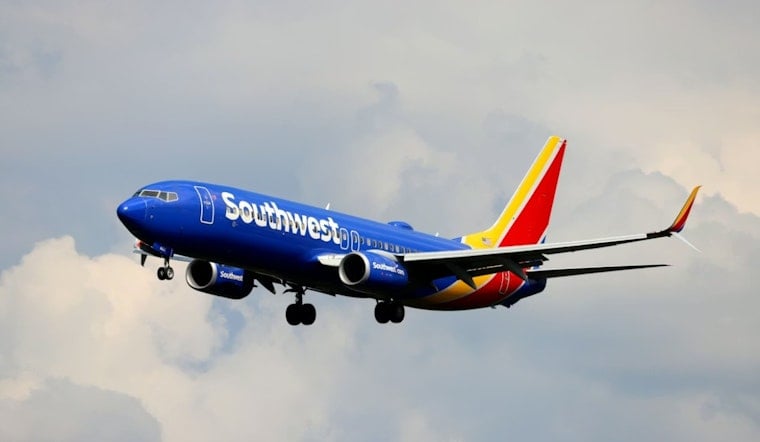
Southwest Airlines has quietly shut the door on lifelike robots flying as passengers after a Dallas-based rental robot took a flight home from Las Vegas and turned into a full-on spectacle. The updated policy closes a loophole that let people buy full seats for machines and follows a string of incidents that raised safety and operational questions for crews and regulators.
In its updated policy, the Southwest Help Center now says the airline will not allow devices that "resemble or imitate" a human or animal in appearance, movement, or behavior. Other robots are still allowed, but only if they fit inside a standard carry-on and comply with existing battery restrictions, according to the Southwest Help Center. Spokesman Lynn Lunsford told reporters the move was driven by concerns about lithium-ion batteries and added that "we have had a handful of recent experiences in which customers either bought seats for devices or tried to carry them on as baggage," comments reported by MySA.
How Stewie Boarded The Flight
The Robot Studio recounts that Stewie, a compact humanoid used at events, strolled and danced through the Las Vegas terminal on its way to Dallas, turning heads long before boarding. Technicians swapped in a smaller battery so it could clear security screening, and Stewie was then escorted down the jet bridge to a window seat while passengers snapped photos and video. A firsthand account and video of the trip were published by The Robot Studio. Local coverage also notes that the team bought Stewie its own ticket instead of sending the device as cargo, according to CBS Texas.
Not The First Disruption
Stewie was not an isolated case. Earlier in May, a 4-foot humanoid nicknamed Bebop caused a roughly an hour-long delay on a Southwest flight from Oakland to San Diego after crews determined its battery exceeded the airline's limits. The crew removed the battery, and the flight departed about an hour late, according to the Los Angeles Times.
What Travelers And Renters Should Know
For travelers and event companies, the new rule means humanoid robot owners will likely have to use cargo services or get explicit clearance from the airline before booking. Buying a seat is no longer a dependable workaround. The FAA's PackSafe guidance notes that lithium batteries with more than 160 watt-hours are prohibited on passenger aircraft and that lower-capacity batteries generally must remain in the cabin, a technical wrinkle that complicates trips for larger event robots. For detailed battery rules, see the FAA and check with the carrier's cargo desks before shipping any large devices.
Reaction And Next Steps
The Robot Studio called Stewie's flight memorable but says its fleet will be grounded from commercial flights for now while airlines sort out their rules. Owner Aaron Mehdizadeh told CBS Texas that the battery used was "essentially a laptop battery" and said he hopes Southwest will reconsider once clear safety standards are in place.
The new policy underscores how airlines and regulators are still scrambling to catch up with devices that fall somewhere between checked baggage and paying passengers. Until rules evolve, event planners and travelers should assume humanoid robots belong in cargo unless a carrier explicitly says otherwise.





