

























































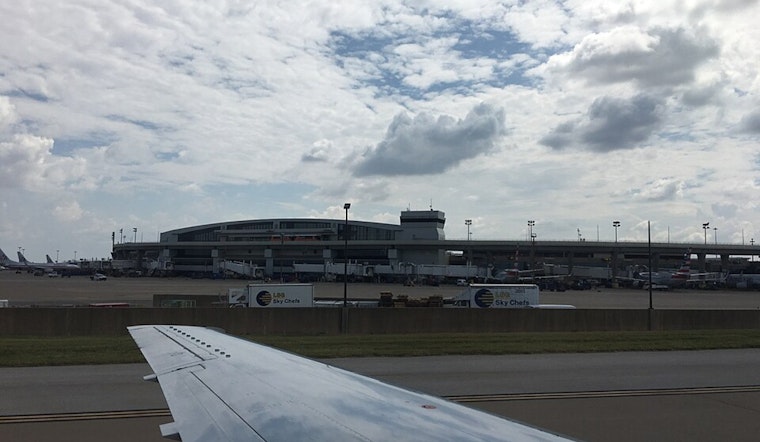
Dallas/Fort Worth International Airport has rolled out its newest safety upgrade: the East Aircraft Rescue and Firefighting station, a purpose-built firehouse designed to cut emergency response times across the airport’s east airfield. The facility replaces fire stations that date back to the 1970s and brings in hardened infrastructure intended to keep crews on the job through severe storms and other major disruptions. Airport officials say the project is a key piece of a broader modernization push as DFW prepares for continued passenger growth later this decade.
Modern design built for speed and resilience
JE Dunn describes the east station as a roughly 41,600-square-foot facility that packs in ten apparatus bays with bi-parting, four-fold doors that open in under seven seconds so trucks can roll out faster. Inside, the building includes dorm rooms, a full kitchen and dayroom, training and fitness areas, and space for hazmat and decontamination storage. The structure is built to ICC-500 standards and includes an F5-rated storm shelter, features meant to replace multiple aging stations and keep crews operating through both severe weather and busy airfield incidents.
New fleet and tech to speed firefighting
DFW has been transitioning to Striker Volterra hybrid Aircraft Rescue and Firefighting vehicles, which accelerate faster than the airport’s older diesel rigs and can run in electric mode to cut emissions and noise. The fleet shift goes hand in hand with a move to fluorine-free firefighting foams and station upgrades that add 480-volt power to support charging needs. Chief Daniel White said the upgrades were designed to reduce response times and improve safety, according to DFW Airport.
Funding and consolidation
The station is part of the airport’s DFW Forward capital program and a larger plan to consolidate four older ARFF sites into two centralized hubs on the east and west sides of the airfield. Industry reporting places the overall facility modernization at roughly $130 million, with more than $75 million in federal support from the FAA’s Airport Improvement Program. The DFW board has authorized contract increases this year to finish construction and adapt to unforeseen site conditions, according to DFW board documents.
What it means for travelers
Airport leaders say faster, more resilient fire stations help keep planes moving and limit the cascading schedule disruptions that can ripple across North Texas during severe weather or major airfield incidents. DFW CEO Chris McLaughlin told reporters the airport expects passenger volumes to approach about 100 million by the end of the decade, according to Fort Worth Report. The airport handled nearly 86 million passengers in 2025, a jump that officials say underscores the need for quicker, centralized response capacity.
Command and coordination upgrades
As detailed by Fort Worth Report, DFW has also added a roughly $3 million, 40-foot mobile command post equipped with advanced cameras, satellite connectivity and a multi-agency radio system that can operate independently for about two days. Jerome Woodard, the airport’s executive vice president and chief operating officer, said, “Incident coordination is as important as capability, and the new station builds on DFW’s connected approach to safety.” Airport officials say a new west station is expected to open later this year as the consolidation effort wraps up.





