

























































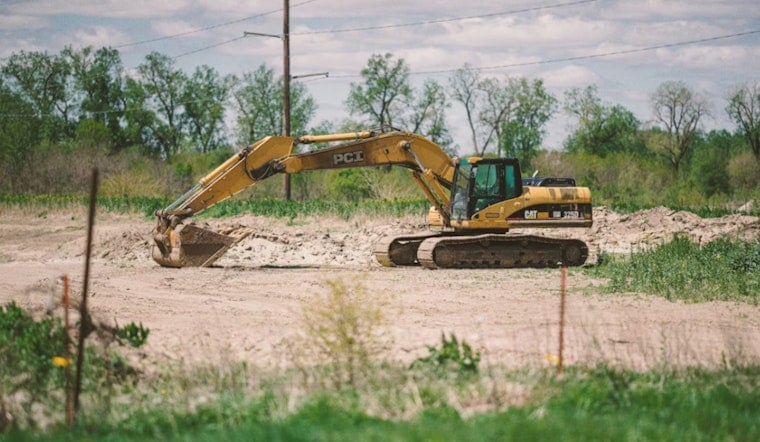
Out east of Houston, crews are racing to build a roughly 700 acre campus that aims to power itself and recycle its own stormwater so it barely touches the Texas grid. The Liberty American Multi-Sourced Power and Innovation Hub, or LAMP, is being sold as an energy, manufacturing, and data center complex built for heavy AI and high compute workloads. Developers say the whole point is to bring huge computing power to the region without draining local electricity or water supplies.
“Whatever we’re doing here is not going to impact the community on their power,” BaRupOn's Balaji Tammabattula told Spectrum News. He said the plan calls for deep detention ponds that would capture rainwater and put it back to work on site, with an estimated storage of about 50 million gallons of water for every 50 acres. The company is framing that approach as a way to cool its gear without tapping local aquifers.
Built To Run Off Its Own Grid
According to BaRupOn, the campus footprint has been pushed to about 701 acres. The master plan calls for as much as 3 gigawatts of on site power generation and around 4.5 million square feet of data center and innovation space. An initial 240 megawatt generation phase is already under construction, backed by long term natural gas supply agreements that are expected to support the early buildout. The site is being carved up into behind the meter power blocks so tenants can have dedicated capacity instead of relying solely on ERCOT.
Microreactors, Gas And Solar In The Mix
The company has also signed a feasibility agreement to study whether advanced microreactors could be located on the property, a step outlined in a press release from Nano Nuclear. At the same time, market deals show a broader shift toward pairing data centers with their own generation. Utilities and fuel suppliers are striking power reservation and energy services agreements that lock in hundreds of megawatts for Texas data center developments, a trend detailed by Data Center Dynamics.
Water And Community Concerns
Across Texas, the rush to build more data centers has already triggered pushback from towns and county leaders who worry about water demand and grid stress, as reported by E&E News. Those concerns have led to proposals for temporary building moratoriums and tougher local reviews as communities weigh job creation against long term water needs. LAMP’s detention pond system and focus on rainwater reuse are being marketed as a direct answer to those fears, although local officials and environmental advocates say they plan to follow permits and groundwater impacts closely.
Jobs And Timeline
Spectrum News reported that BaRupOn expects its first phase to go live in about three months, with roughly 300 workers needed for initial operations. The company’s project materials also pitch the site as having shovel ready pads and available manufacturing space for early tenants. How fast that vision turns into paychecks will hinge on the pace of power block construction, water infrastructure buildout, and regulatory approvals.
What to watch next: whether the microreactor study turns into a concrete proposal, how state and local officials handle water use permits, and which operators sign on for behind the meter energy deals. Observers say LAMP could become an early test case for whether large, power hungry facilities can be built without piling extra strain on nearby communities. For more context on the power reservation agreements now common in Texas data center projects, see coverage from Data Center Dynamics.




