

























































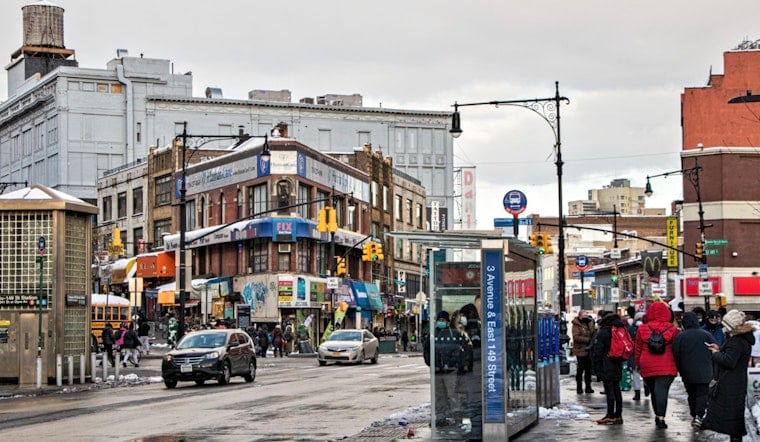
From Riverdale to Kingsbridge, long-familiar shop windows are going dark as a new neighborhood study finds rising vacancies and punishing rents reshaping commercial life across the northwest Bronx. While a few restaurants and salons are snapping up space, many independent storefronts are hanging on by a thread.
The Business and Retail Analysis was put together by community planning fellow and Baruch College MPA candidate Kahdija Jabbi and presented this spring to Bronx Community Board 8’s economic development committee. According to Bronx CB8, Jabbi used field observations, interviews and LiveXYZ mapping to log storefront types, track where vacancies are clustering and catalog community needs across Community District 8.
Where vacancies show up
The report identifies several vacancy hot spots and pegs the overall storefront vacancy rate at about 6.9 percent across Community District 8, a number the analysis flags as reason for concern locally. Residents quoted in the presentation describe Knolls Crescent as “desolate” and “marked with graffiti,” and the study notes that out-of-the-way strips without good transit access are proving especially vulnerable when tenants move out. Charts in the CB8 presentation to the board spell out where the empty windows are most concentrated and how those patterns have shifted.
Rents and retail turnover
Local reporting and brokers told the Riverdale Press that steep commercial rents, sometimes around $10,000 a month for relatively small spaces, remain one of the biggest obstacles for neighborhood businesses trying to stay put or get started. The paper has tracked recent closures, including the shutdown of Chili and Curry on Kappock Street, even as other operators like Tin Marin and Bokagua have managed to expand into adjacent storefronts when they open up.
Constance Barnes-Watson, who chairs CB8’s economic development committee, told the Riverdale Press that “residents sometimes do not know they are part of the community board.” The analysis leans on that comment to argue that increasing outreach and basic civic awareness could be a first step toward building support for small businesses before they hit a crisis point.
What the study recommends
The report does not just diagnose problems, it lays out a to-do list. It calls for more direct small-business outreach, tighter coordination with city agencies such as the Department of Small Business Services, a districtwide survey to understand what neighbors feel is missing and regular sit-downs with property owners who control empty storefronts. Another recommendation is community support for statewide measures that would discourage long-term vacancies.
To that end, the analysis points to state legislation that would create a commercial vacancy tax on storefronts held empty for extended periods. Senate Bill New York State Senate and Assembly Bill New York State Senate are cited as potential tools to nudge landlords into bringing spaces back into use instead of leaving them dark.
Local reaction and next steps
Community activists and neighborhood groups are already zeroing in on fragile retail clusters. Around the Knolls-Kappock stretch, residents have launched an organizing push and petition effort aimed at getting landlords to the table and pressing for more realistic rents. The Save Knolls-Kappock campaign materials show neighbors urging elected officials and property managers to meet with them about how to stabilize tenancy on the strip. Change.org carries the petition, which documents local demands for follow-up conversations with owners and relevant city agencies.
Board members and brokers quoted around the study say the solutions sketched out are fairly straightforward on paper, things like outreach, landlord convenings and targeted agency support, but warn that none of it works without sustained follow-through. With the CB8 presentation now out in the open, the next test is whether city agencies, lawmakers in Albany and property owners shift from listening mode to action that can keep storefronts across the northwest Bronx from going permanently dark.





