

























































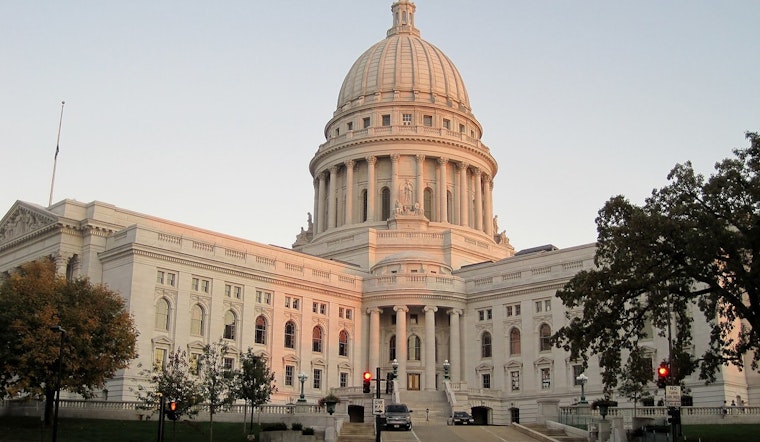
The Wisconsin Institute for Law & Liberty has launched a federal court fight in Milwaukee, asking a judge to sideline a state professional standard that regulators treat as a de facto ban on conversion therapy. The lawsuit argues that licensed counselors risk discipline for talk therapy aimed at changing a client’s sexual orientation or gender identity, and that the rule puts a chill on private, client‑initiated counseling conversations grounded in religious faith. The case drops Wisconsin’s rule straight into the post–U.S. Supreme Court tug‑of‑war over how far government can go in policing what therapists say to their clients.
The lawsuit and the plaintiffs
Filed May 12 in the U.S. District Court for the Eastern District of Wisconsin, the case, KOSCHNICK v. Evers, was brought by WILL on behalf of Terri Koschnick and Joy Buchman. Both are licensed counselors who, according to the group, provide talk therapy that weaves in their Christian beliefs at the request of clients, as described by WILL.
The rule at issue
The lawsuit zeroes in on Wis. Admin. Code MPSW § 20.02(25), a provision the state’s high court summarized as treating as unprofessional conduct any therapist who "[e]mploy[s] or promot[es] any intervention or method that has the purpose of attempting to change a person’s sexual orientation or gender identity." The rule was applied to marriage and family therapists, professional counselors and social workers after a lengthy rulemaking battle, according to the Wisconsin Supreme Court.
How the Supreme Court ruling matters
The Wisconsin challenge arrives on the heels of a U.S. Supreme Court decision this March that flagged constitutional problems with a Colorado law restricting certain conversion‑therapy practices and instructed lower courts to apply strict scrutiny. Parts of a therapy ban can amount to viewpoint discrimination, the Court said, and some forms of talk therapy fall within the realm of protected speech, according to AP.
Evers and advocates weigh in
Before suing, WILL urged state officials to stand down on enforcing the rule. Gov. Tony Evers shot back in a May 5 letter, arguing the request "relies on a significant misreading of the U.S. Supreme Court’s recent decision" and insisting his administration "has no intention of repealing Wisconsin’s conversion therapy ban," according to Wisconsin Public Radio. Public‑health organizations and major medical groups, meanwhile, have long warned that conversion therapy is ineffective and associated with higher rates of depression, anxiety and suicidality; the American Psychological Association summarizes that research on its website at APA.
Supporters of the suit
WILL’s deputy counsel, Rebecca Furdek, argues that counselors "have every right to provide Christ‑centered talk therapy to the clients who seek them out." The organization says the case targets what it sees as a rule that effectively outlaws consensual, client‑driven Christian counseling, according to WILL.
Legal outlook
The complaint portrays MPSW § 20.02(25) as unconstitutional viewpoint discrimination that violates the First Amendment and asks the federal court to block its enforcement. How the Eastern District of Wisconsin applies the Supreme Court’s Colorado guidance — including whether it treats at least some therapist–client conversations as protected speech and subjects the rule to strict scrutiny — could be decisive and may determine the fate of similar professional‑licensing standards, per AP.
What’s next
The case now sits before a federal judge in Milwaukee, who will set deadlines for briefs and motion practice, including any bid for a preliminary injunction that could temporarily halt enforcement of the rule. Whatever the district court decides, an appeal is all but certain, setting up a longer legal fight that could ripple beyond Wisconsin as other courts wrestle with how the Supreme Court’s ruling applies to licensed therapists.





.jpg)