

























































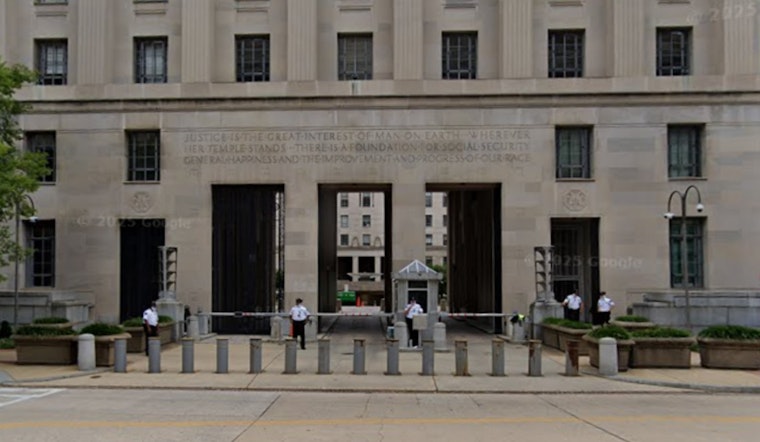
The U.S. Department of Justice filed suit against the state of Connecticut and several of its top officials on Friday, May 15, 2026, arguing that a newly signed law unlawfully regulates federal law enforcement and puts federal officers in harm’s way. The lawsuit targets portions of Senate Bill 397, known at the statehouse as the Act Concerning Democracy and Government Accountability, that the DOJ says would bar federal officers from wearing facial coverings, require agents to display badges and name tags, and force them to follow Connecticut’s use-of-force rules while carrying out federal duties. The department is asking a federal judge to halt enforcement of those specific provisions.
According to the Department of Justice, the complaint, filed May 15 in the U.S. District Court for the District of Connecticut, argues that SB 397 is “an unconstitutional attempt to regulate federal law enforcement officers” and that the challenged sections “create risk for our agents.” The government’s complaint (PDF) names the State of Connecticut, Gov. Ned Lamont, Attorney General William Tong, Chief State's Attorney Patrick Griffin and Deputy Chief State's Attorney Eliot Prescott as defendants and seeks both injunctive and declaratory relief.
What The Bill Does
Senate Bill 397, titled “An Act Concerning Democracy and Government Accountability,” bundles several measures, including new protections for designated “sensitive locations” and fresh rules on how state and local officials interact with federal immigration officers. As shown in the bill text posted on the Connecticut General Assembly site, the law contains sections that prohibit federal officers from wearing face coverings in certain situations, require visible identification such as badges and name tags, and attempt to subject federal officers operating in Connecticut to the state’s use-of-force standards.
DOJ Cites Supremacy Clause And Safety Fears
The DOJ argues those provisions collide with the Supremacy Clause because they directly regulate how federal officers perform their core functions. Legal analysis from Bloomberg Law notes that federal courts have already blocked similar state efforts, including a Ninth Circuit order that stopped enforcement of a comparable California statute, and frames the Connecticut case as part of a broader pattern of federal challenges to state and local limits on federal enforcement activity.
State Pushes Back
Connecticut officials say they are not backing down. “The state's actions are both fully lawful and necessary to protect public safety and we will vigorously defend the law,” Attorney General William Tong told Bloomberg Law. Supporters of SB 397 contend the statute is aimed at safeguarding sensitive locations and community safety, not at picking a fight with Washington, even if that is how it is playing out in court.
What’s Next
The case, United States v. Connecticut, No. 3:26-cv-758, will move forward in the federal District of Connecticut, where the Justice Department is asking for declaratory and injunctive relief to block enforcement of the contested sections while the lawsuit proceeds. Local coverage from News 12 New York notes that the suit pulls in the governor and the state’s top prosecutors, underscoring how a once wonky bill on “government accountability” has morphed into a high-profile flashpoint in the national fight over state efforts to curb federal immigration enforcement.





