

























































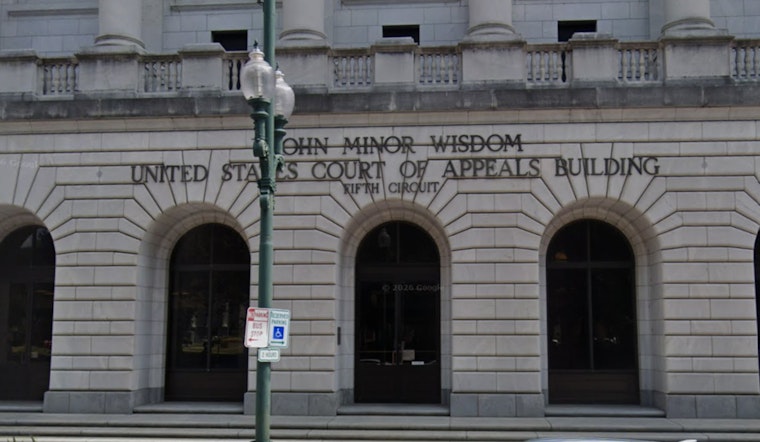
A federal appeals panel has ruled that brutal prison conditions in El Salvador are not, by themselves, enough to stop a deportation, keeping in place the removal order for a Salvadoran man convicted of murder. The opinion, issued March 24, 2026 by the U.S. Court of Appeals for the Fifth Circuit, agreed with earlier decisions from an immigration judge and the Board of Immigration Appeals that the petitioner had not shown it was "more likely than not" he would face torture if returned. For Texans, the ruling comes from the circuit that oversees federal appeals out of the state, so its reasoning will carry real weight in local immigration cases.
Case basics and the court's ruling
According to the U.S. Court of Appeals for the Fifth Circuit, the petitioner, Jose Fuentes‑Pineda, is a native of El Salvador who admitted entering the United States unlawfully in 2022 and had previously been convicted of a gang‑related homicide in his home country. The court reviewed the Board of Immigration Appeals' adoption of an immigration judge's decision and denied Fuentes‑Pineda's petition for deferral of removal under the Convention Against Torture (CAT). The panel also noted that Fuentes‑Pineda was removed to El Salvador on January 14, 2025 after an emergency stay was denied.
The judges wrote that "[s]ubstantial evidence supports the conclusion that El Salvador's harsh prison conditions aren't intentionally designed to inflict torture," rejecting the argument that general detention conditions alone fit the CAT's narrow definition of torture. Under the court's reading of existing precedent, an applicant must show a high probability that the state will deliberately inflict severe pain or suffering, not just that prison conditions are substandard or dangerous. Walking through the immigration judge's review of reports and testimony, the opinion concludes the record does not compel a different result.
How the court weighed country‑condition evidence
The panel credited the immigration judge for weighing multiple sources of country‑condition evidence, including human‑rights reports and witness testimony. But it held that those materials did not prove the required "specific intent" by Salvadoran officials to inflict torture. As outlined by Justia, the court treated U.S. State Department reporting and NGO findings as part of the record, while stressing that negligence, overcrowding or isolated abuses are legally distinct from an intentional program of torture.
Legal context and precedent
The decision tracks long‑standing Board of Immigration Appeals and federal precedent that requires a showing of specific intent to torture. That framework traces back to the BIA’s en banc ruling in Matter of J‑E‑, 23 I. & N. Dec. 291 (BIA 2002). The BIA's standard, which focuses on whether mistreatment is "intentionally inflicted" for a prohibited purpose, is discussed in the panel opinion and remains the controlling test for CAT deferral claims in immigration courts, per U.S. Department of Justice.
What advocates and legal observers are saying
Local coverage cast the ruling as a win for the federal government's deportation push. News Radio 1200 WOAI described the outcome as a legal boost for the administration and quoted former immigration judge Mark H. Metcalf as saying the petitioner’s claim "was failing from the start." Attorneys who defend removal‑bar claims say the decision highlights how narrowly courts read detention‑conditions arguments and that successful CAT defenses usually hinge on evidence of individualized targeting by state actors.
What this means for Texas and Houston
The Fifth Circuit’s opinion will be cited in removal proceedings across the circuit, which covers Texas, Louisiana and Mississippi, so immigration attorneys in Houston can expect judges to rely on the panel’s interpretation of the CAT standard in similar cases. For people fighting removal, the ruling underscores the need to develop concrete, case‑specific evidence of intentional state action rather than leaning mainly on general reports about prison conditions. Advocates who monitor returns to Central America say the decision will likely spur more litigation and deeper factual development in individual files.
Practical takeaway
In practical terms, the court rejected the claim that even life‑threatening detention conditions, standing alone, satisfy the narrow legal definition of "torture" under the CAT. That approach is set to shape how immigration judges in the Fifth Circuit evaluate future deferral claims. The opinion is now part of the circuit record and may be cited in petitions for further review, but for now it strengthens the government's position that poor prison conditions, without proof of intentional state‑directed torture, do not automatically block removal.





