

























































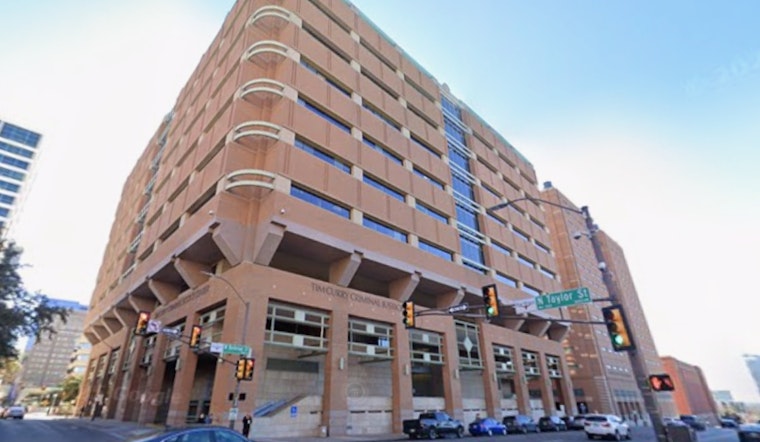
Faith leaders, defense attorneys, and community advocates gathered yesterday outside the Tarrant County Courthouse, turning up the heat on the county’s top prosecutor over what they call a racially skewed and overly aggressive approach to the death penalty. The group marched a letter into the Tarrant County Criminal District Attorney’s Office, demanding immediate policy changes, more transparency, and an independent audit after a new study flagged the county’s outsized role in capital prosecutions. Organizers zeroed in on “upcharging” and the routine use of burglary and robbery aggravators, arguing that those tactics disproportionately funnel people of color onto death penalty tracks.
New Report Calls Tarrant County An 'Extreme Outlier'
A report by Texas Defender Service pegs Tarrant County as an “extreme outlier” in capital cases. According to the study, since 2020 the county has brought nearly one in four of Texas death penalty trials while making up only about 7% of the state’s population, and it accounted for 42% of the state’s capital trials since 2024. Researchers reviewed 431 capital murder cases charged over a 20-year period and found that about 35% did not result in a homicide conviction, while roughly 10% of defendants charged later received no jail time at all.
Faith Leaders Deliver Letter To DA
At a noon press conference, 14 clergy members and community advocates handed their letter to the DA’s office, publicly urging policy changes aimed at shrinking racial disparities in both charging and sentencing. Estelle Hebron-Jones of Texas Defender Service told reporters the findings are “very current” and said Tarrant County “represents an outsized influence” on how capital punishment is used in Texas, according to the Dallas Observer.
Upcharging, Race And Plea Leverage
The report criticizes prosecutors for what it calls “upcharging” - filing capital murder charges in cases where lesser charges might also fit - and using those more serious counts as leverage to push defendants into plea deals. The analysis found that Black defendants are disproportionately targeted by this strategy. It also concluded that 67% of the people charged with capital murder who ultimately served no jail time were Black, a disparity advocates say is hard to read as anything but systemic bias.
DA's Office Pushes Back
Tarrant County Criminal District Attorney Phil Sorrells responded with a prepared statement saying his office evaluates each case based on the evidence, the defendant’s criminal history, and input from victims’ families. He said that “in making this determination I do not know the race of the defendant,” according to the Fort Worth Star-Telegram. Sorrells added that his prosecutors are focused on seeking justice for victims while following state law.
High-Profile Cases Put The Debate In Sharp Relief
Advocates say the stakes around those charging decisions feel especially immediate after a pair of high-profile developments. A Tarrant County jury this week sentenced Tanner Horner to death for the 2022 kidnapping and killing of 7-year-old Athena Strand, a verdict reported by CBS Texas. Meanwhile, the Texas Department of Criminal Justice’s scheduled executions list shows Edward Busby Jr. set for next Thursday, according to the Texas Department of Criminal Justice execution calendar.
What Advocates Are Asking For Next
The letter and the underlying report lay out a specific wish list for the DA’s office. Advocates want prosecutors to stop seeking the death penalty in murder cases that grow out of unplanned robberies or burglaries, end routine upcharging, create a public racial justice dashboard, and pay for an independent audit of charging practices. They say they will keep pressing county leaders and other elected officials to adopt those changes as scrutiny of local prosecutorial discretion intensifies. The formal role and responsibilities of the office are described on the Tarrant County Criminal District Attorney page.



