

























































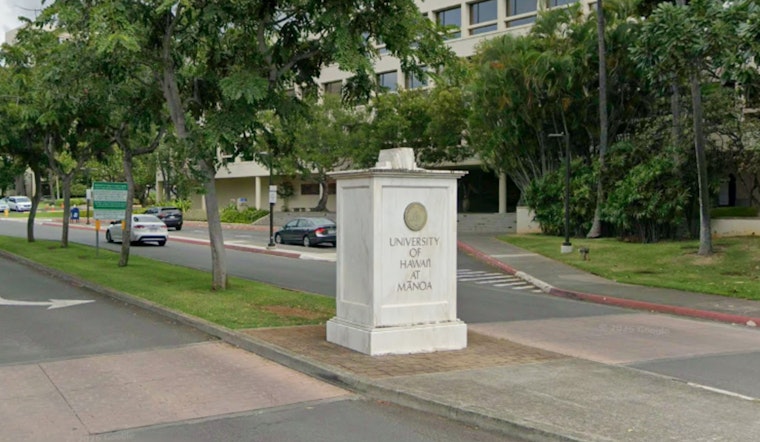
University of Hawaiʻi at Mānoa researchers are putting out a call to residents and growers statewide, asking for help fine-tuning a plan to beat back invasive fruit flies before they chew further into local harvests. The team is pairing a short survey with on-the-ground monitoring and community workshops to see which trapping and baiting tactics actually work in real-world conditions. The goal is to shield everything from backyard mango trees to large commercial farms from persistent fruit fly infestations.
As reported by Kauai Now, the College of Tropical Agriculture and Human Resources (CTAHR) says the survey is open through June 30, 2026, and is aimed at farmers, home gardeners, landscapers and anyone else battling fruit flies. Extension entomologist Pascal Aigbedion-Atalor is quoted in a university release saying, “Community voices are a major part of this food security project,” and urging hundreds of responses from stakeholders. The survey is part of an initiative funded by the Hawaiʻi Department of Agriculture and Biosecurity.
Why this matters for farms and gardens
Oriental and other invasive fruit flies are not picky eaters. Agriculture Victoria notes that the oriental fruit fly alone can infest more than 400 varieties of fruits and vegetables, giving it an enormous menu across Hawaiʻi.
The statewide biosecurity roadmap, the Hawaii Interagency Biosecurity Plan, cites roughly $300 million in annual losses tied to alien fruit-fly infestations. For local growers, that kind of hit is not an abstract number - it can show up as rotting fruit on the ground and fewer crops making it to market.
How researchers are responding
CTAHR researchers have launched broad field studies on Hawaiʻi Island, Kauaʻi, Maui and Oʻahu to track fruit fly populations in real time and test different trap designs and bait formulations, according to the university release reported by Kauai Now. Alongside the science work, extension agents are ramping up outreach through community workshops and instructional videos that walk through sanitation practices and proper bait application.
For more information, CTAHR lists assistant specialist and extension entomologist Pascal Aigbedion-Atalor ([email protected]) and Maui County administrator Surendra Dara ([email protected]) as contacts for outreach questions. Researchers say those direct emails, combined with survey responses, will help them decide which tools and trainings to prioritize to cut on-farm losses.
With potential losses already estimated in the hundreds of millions of dollars, university scientists say community input will shape which control strategies get scaled up across the islands. The survey remains open through June 30, 2026.





