

























































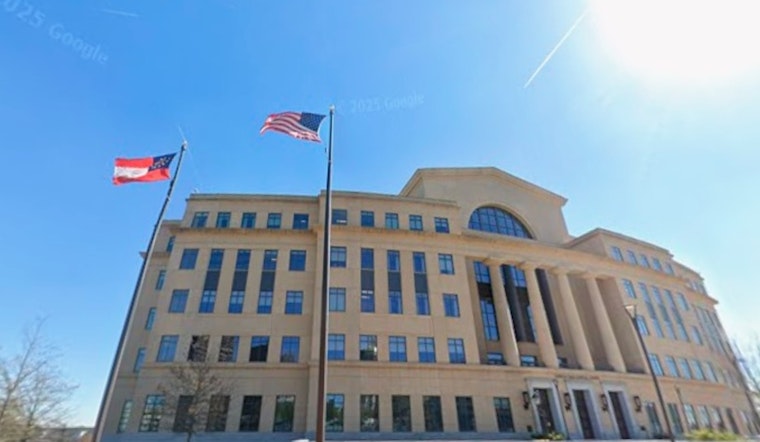
Two Democratic-backed challengers for the Georgia Supreme Court have quietly hauled members of the state’s Judicial Qualifications Commission into federal court in a lawsuit that is sealed from public view, even as early voting is underway. On Friday, The Atlanta Journal-Constitution asked to intervene and urged a federal judge to unseal the filings so voters can read the complaint and related motions before casting their ballots in the May 19 contests.
The newspaper’s motion to intervene argues that the court should open the record and allow its participation, saying, “The First Amendment demands this result, and the voters of Georgia deserve no less,” according to The Atlanta Journal-Constitution. The filing contends that voters need to see the documents to judge for themselves whether the candidates or the JQC crossed any lines.
Court records identify the plaintiffs as Jennifer Auer Jordan and ShaMiracle J. Rankin. They asked the U.S. District Court for the Middle District of Georgia for permission to file a verified complaint, a motion for a temporary restraining order and a request for an expedited hearing, all under seal. According to records posted on Justia Dockets & Filings, Chief U.S. District Judge Leslie Abrams Gardner granted a temporary seal on May 1 and said it will be lifted when the court decides the time is right.
The defendants named in the secret complaint are Victoria S. Darrisaw, James Coursey Jr. and Warren Selby, who are listed as members of the Judicial Qualifications Commission’s investigative panel, according to the commission’s website. The JQC is the state agency that investigates and prosecutes allegations of judicial misconduct and, at times, privately alerts judicial candidates to possible code-of-conduct violations, per the commission.
Jordan and Rankin are running Democratic-backed challenges against incumbent Justices Charlie Bethel and Sarah Hawkins Warren in nonpartisan May 19 races, centering their campaigns on voting and reproductive-rights issues. Georgia Public Broadcasting has reported that both contests have drawn far more attention than Georgia’s typical sleepy May judicial races.
Legal Stakes And Precedent
The May 1 order notes that federal courts start from a strong presumption of public access to judicial records and that sealing is allowed only when keeping information from public view is narrowly tailored to protect a higher value. The court’s language is available on Justia Dockets & Filings, which lays out the judge’s rationale for agreeing to a temporary seal while the dispute plays out.
The fight also unfolds in the shadow of a recent, closely watched clash with the JQC. Former U.S. Rep. John Barrow sued members of the commission in 2024 after the JQC warned him about his campaign messaging, and a federal judge later tossed that case for lack of standing. Courthouse News Service reported on Barrow’s lawsuit and its dismissal.
What Comes Next
A hearing on the secrecy fight is set for Monday, May 11, in federal court in Albany, where the judge will decide whether to keep the lawsuit under seal or open the record to the public. As reported by The Atlanta Journal-Constitution, the JQC has asked for more time to respond to the plaintiffs’ motion, while the newspaper argues that the courtroom doors should stay open.
However the judge rules, the decision is likely to influence how freely judicial candidates talk about hot-button topics on the campaign trail and whether voters get to review the underlying allegations before they make their choices. We will continue to track new filings and the outcome of the hearing as the case moves forward.




