

























































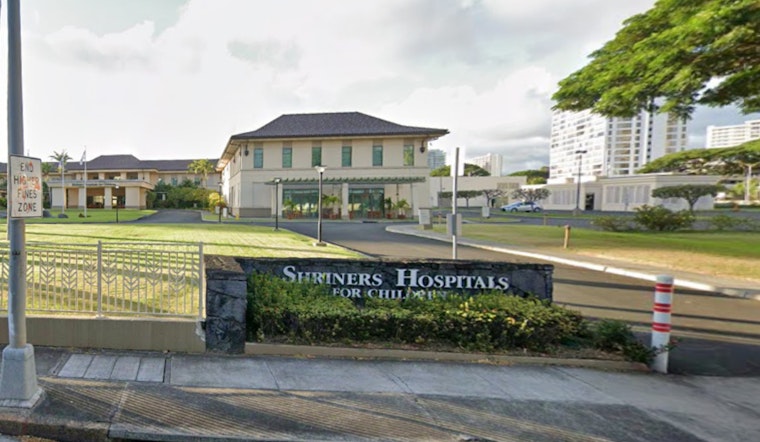
A long-running bingo fraud tied to a Guam charity hall is now poised to send more than $10.7 million to the Aloha Shriners, after federal prosecutors said operators quietly siphoned cash that players were told would fund travel for children to Shriners Hospitals in Honolulu.
Three people connected to the Guam Shrine Club's Hafa Adai Bingo operation - Jose Arthur "Art" Chan Jr., his wife Christine Chan, and Michael L. Marasigan - were convicted and later sentenced in federal court. Prosecutors say Hafa Adai Bingo generated roughly $34 million in gross proceeds between 2015 and 2021, while only a thin slice of that money ever reached the charity the games were supposed to support.
According to a press release from the U.S. Attorney's Office, the court ordered $10,750,804 in joint and several restitution to the Aloha Shriners and imposed prison terms on all three defendants. Jose Arthur D. "Art" Chan Jr. was sentenced last Tuesday to five years in federal prison, Christine C. Chan received a 70-month sentence, and Michael L. Marasigan, whom prosecutors describe as a fugitive, was sentenced in absentia to 262 months. The same release details forfeiture judgments and mandatory assessment fees tied to each defendant.
A jury convicted the three of conspiracy to operate an illegal gambling business, money laundering conspiracy and conspiracy to commit wire fraud, court records show. Prosecutors said players were repeatedly told their bingo dollars would cover travel for children and a guardian to Shriners Hospitals in Honolulu. As reported by Hawaii News Now, bank records introduced at trial showed about $140,378 in proceeds reached the Aloha Shriners from 2015 through 2020, and nothing at all in 2021.
How Prosecutors Say The Scheme Worked
Court filings describe how prosecutors alleged that the Guam Shrine Club's nonprofit status and bingo permits were used as cover while Marasigan's company actually ran Hafa Adai Bingo. According to the government, cash from the games was routed through club accounts, then moved out via checks to co-conspirators. Prosecutors presented sponsorship agreements for games at the Guam Greyhound Park, accounting exhibits and witness testimony to trace who handled the money and where it went. Detailed evidence introduced at trial is laid out in govinfo court records.
Sentences, Forfeiture And Co-defendants
The U.S. Attorney's release does not just list prison terms, it also tallies the financial hit. "These defendants traded on the reputation of the Shriners Children’s healthcare system to perpetrate their multi-million-dollar fraud," U.S. Attorney Shawn N. Anderson said in the statement. On top of the $10.75 million restitution order, the court imposed a $5,871,493 forfeiture money judgment against Marasigan, $871,500 against Christine Chan and $339,013 against Art Chan.
Several co-defendants who pleaded guilty and testified for the government - including Juanita Capulong, Minda C. San Nicolas, Alfredo Leon Guerrero and Won Sun P. Min - received probationary or time-served sentences. They were also ordered to pay restitution, with individual amounts ranging from roughly $479,075 up to about $2.3 million, according to the U.S. Attorney's Office.
Fugitive Boss Complicates Enforcement
Marasigan has remained out of custody since he failed to return from court-approved travel and was later added to the FBI's wanted list, coverage notes. That status complicates efforts to collect restitution and enforce his lengthy sentence. Authorities have said they suspect he may be in the Philippines, and the FBI posting highlighted by Gambling Insider underscores the challenge of securing both his custody and any assets that could be used to satisfy forfeiture orders.
What It Means For Donors And Patients
The restitution order gives the Aloha Shriners a legal claim on any funds that can be recovered, but court records and trial exhibits show only a tiny fraction of the roughly $34 million raised ever made it to the charity. That gap suggests recovering the full judgment could be slow and incomplete.
For donors and families who have relied on the club for travel assistance, the case means more waiting while prosecutors, forfeiture officers and victims' representatives hunt for assets and try to enforce the court's orders. For local readers, it also serves as a pointed reminder to review nonprofit filings and be cautious when organizers promise that fundraising proceeds will pay for medical travel. The broader fallout and victim impact are detailed in coverage by Hawaii News Now.



