

























































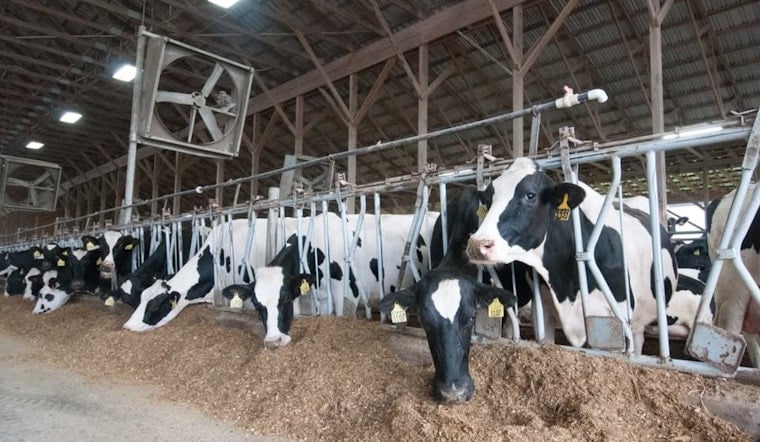
Hawaiʻi's cows and goats are racking up frequent-flyer miles. Ranchers across the islands have been sending livestock off to the mainland in unusually large numbers, with nearly 55,000 cattle shipments logged between 2023 and 2025. Goats account for about one fifth of all animals on the move, and the outflow is tightening local meat supplies at the exact moment demand for Hawaiʻi-raised products is climbing.
State shipment records show 54,397 bovine moves between 2023 and 2025 - about 75.6% of the 71,932 animal loads tracked over that period - while caprine (goat) shipments totaled 14,263, roughly 19.8% of the total, according to the Hawaiʻi Department of Agriculture and Biosecurity. Total inter-island and outbound animal shipments rose roughly 44% over the three years as cattle movements jumped nearly 49%.
Big Island Supplies Most Of The Herd; Oʻahu Acts As A Hub
The Big Island is doing the heavy lifting. Roughly three quarters of the outbound animals originate on Hawaiʻi Island, while Oʻahu doubles as both a processing center and a common layover for cattle headed to the mainland, as reported by Honolulu Civil Beat. It is all part of a long-standing cow-calf model in which calves are raised locally, then shipped off-island for finishing and slaughter.
Why Ranchers Are Shipping Away
Two big market forces are pushing those animals onto boats and planes. The U.S. cattle herd is at historically low levels, with USDA’s National Agricultural Statistics Service reporting 86.2 million head on Jan. 1, 2026, the smallest January 1 total since 1951. At the same time, USDA Economic Research Service forecasts call for sharply rising beef and veal prices, which puts a premium on young Hawaiʻi cattle. Put together, those national dynamics make it more profitable for many producers to move animals to mainland finishers instead of trying to finish and sell mature animals on island.
Slaughter Capacity Is The Chokepoint
Hawaiʻi produced about 9.1 million pounds of commercial red meat in 2024, but limited local slaughter capacity still pushes much of the state’s livestock off the islands, according to the state's red-meat statistics. Lawmakers and the Agribusiness Development Corporation have sought capital funds to expand processing, including a 4 million dollar capital request to develop a small-animal slaughter facility in Kunia, as part of broader planning to keep more meat in-state. Hawaiʻi Department of Agriculture figures and budget requests show officials are focused on cold storage, additional slaughter lines and value-add capacity to shorten the supply chain.
What This Looks Like On The Ground
For many ranchers, the cow-calf model that scaled up in the 1990s still pencils out. They raise calves locally, sell them to mainland finishers and sidestep the high fixed costs and logistical headaches that come with on-island processing. The flip side is that local restaurants, school meal programs and everyday consumers are left to battle it out with mainland buyers for the relatively small volume of mature, locally slaughtered beef.
What Comes Next
Federal grants and technical assistance aimed at expanding small-scale processing could shift that balance over time. The USDA’s Agricultural Marketing Service runs the Local Meat Capacity (Local MCap) grant program and other efforts designed to boost processing for small and regional processors. USDA Agricultural Marketing Service materials, combined with state CIP requests and Agribusiness Development Corporation planning for Kunia, will help determine whether more animals are processed at home or keep catching that ride to mainland finishers.





