

























































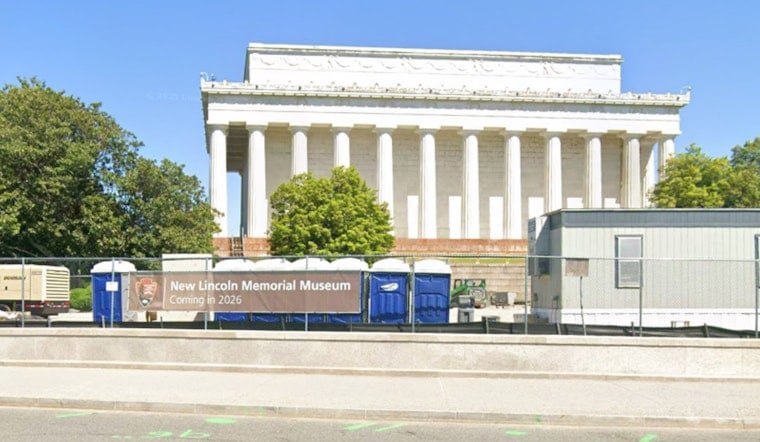
For more than a century, the Lincoln Memorial has kept a secret beneath all that marble. Now its long-hidden undercroft is being transformed into a 15,000-square-foot museum slated to debut in July, just in time for the nation’s 250th anniversary. Visitors will be able to stroll among the memorial’s original concrete columns, stand inside immersive projections of moments like Marian Anderson’s 1939 concert and Martin Luther King Jr.’s “I Have a Dream” speech, and dig into how the monument was built and later turned into a national stage for protest. What used to be pure basement infrastructure is being refashioned into a thoroughly modern interpretive space.
According to the National Park Service, the nearly $69 million public–private effort will carve out those 15,000 square feet of exhibit space inside the undercroft, add floor-to-ceiling glass walls and an immersive theater, and is on track for completion by July 4, 2026. Jeff Reinbold, superintendent of National Mall and Memorial Parks, has described the undercroft as a “fascinating setting” to tell a more complete story of Lincoln and the memorial that bears his name.
Funding and who paid for it
Most of the money has come from private donors, according to the National Park Foundation. The foundation reports raising more than $43 million for the project, including an $18.5 million gift from financier David Rubenstein in 2016 that helped get the whole thing off the ground. The National Park Service has put in roughly $26 million, bringing the total to around $69 million. The foundation has taken the lead on organizing and overseeing the private fundraising push.
Inside the undercroft
Designers are inserting a sleek glass structure inside the undercroft so visitors can move along interpretive paths while still seeing the memorial’s original concrete columns. Projection-based programs will play across the space, including a short immersive theater experience that throws archival images directly onto the pillars. Exhibits are planned to walk people through how the memorial was constructed, what its symbolism has meant over time, and how it became a backdrop for key civil-rights moments. Those features and layout choices have been detailed in national coverage of the project, including by Smithsonian Magazine.
Ford's Theatre and Lincoln's legacy
Just up the road, Ford's Theatre, the site of Lincoln’s assassination and now a hub for performance and education dedicated to his memory, is continuing to lean into programming that complements the memorial’s new interpretive lens. Under Director Paul R. Tetreault, Ford’s Theatre Society presents itself as a place to explore Lincoln’s life and the larger civic questions that orbit his legacy, onstage and in the classroom. More on that institutional role is available from Ford’s Theatre.
What to know before you go
Tourists worried the whole memorial is closing can relax. Park officials say the famous steps and the chamber with the statue of Lincoln will stay open throughout construction. What is off-limits for now are the basement exhibits, restrooms, and the chamber elevator. While crews work, the Park Service is providing temporary restrooms, a temporary bookstore, and an accessible lift, according to the National Park Service. Consigli Construction started on-site work in early March and is handling demolition, waterproofing, and the installation of the glass exhibit enclosure, industry outlet ENR reports.
Officials have not yet released final ticketing information or operating schedules for the undercroft galleries. Visitors hoping to time their trips around July’s semiquincentennial events are advised to monitor Park Service updates and brace for serious crowds. The new space is intended both to pull in first-time visitors and to deepen the way repeat travelers understand one of Washington’s most photographed monuments, according to the National Park Foundation.





