

























































Seven Smithsonian museums on the South Side of the National Mall shut their doors Thursday after a mechanical failure at a 90-year-old federal utility plant knocked out the chilled water supply that keeps galleries cool and humidity-controlled. The closures hit during a Washington, D.C. heat wave with heat index values near or above 100 degrees, adding urgency to getting climate systems back online before sensitive artifacts could be damaged.
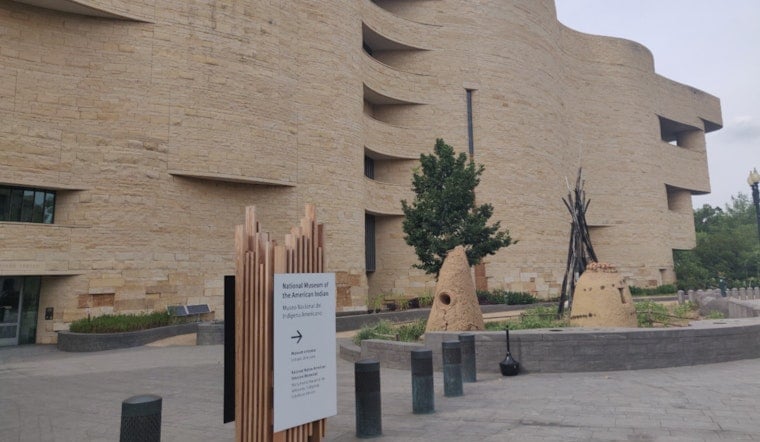
The U.S. General Services Administration confirmed the outage originated at its Heating Operation and Transmission Division Central Heating Plant, which also disrupted air conditioning at the Department of Agriculture, the Department of Energy, the National Gallery of Art, and the National Air and Space Museum, according to a GSA statement. On the Smithsonian side, the closures affected the Arts and Industries Building, the Hirshhorn Museum, the National Museum of the American Indian, the S. Dillon Ripley Center, the National Museum of Asian Art, the Smithsonian Castle, and the National Museum of African Art, as reported by The Independent.
The plant outage disrupted the chilled water supply essential for museum cooling and humidity control systems, per the same reporting, forcing the shutdown of buildings that house irreplaceable collections. Extreme heat and humidity swings can be especially damaging to museum artifacts, and Hyperallergic notes that the near-100-degree heat index Thursday amplified the urgency of restoring climate control before galleries reopened.
A Repeat Failure From Last Summer
This is not the first time D.C.'s aging federal cooling network has buckled under summer heat. In July 2025, four South Mall Smithsonian museums — the Hirshhorn, the National Museum of Asian Art, the National Museum of African Art, and the National Museum of the American Indian — were forced to close for three days after a similar GSA central plant outage disrupted chilled water and steam service, according to the Washingtonian. The recurrence points to a systemic vulnerability rather than an isolated breakdown.
The Central Heating Plant was built between 1933 and 1934 and added to the National Register of Historic Places in 2007. The GSA says the facility services more than 100 federal and quasi-governmental buildings across Washington, D.C., delivering steam and chilled water through roughly 12 miles of underground tunnels and pipelines. Since the 1990s decommissioning of the West Heating Plant in Georgetown, the Central Heating Plant has operated without installed backup capacity for major failures, often requiring full shutdowns or temporary rented boilers during repairs, according to GSA environmental planning documents.
Billions In Deferred Repairs
The outage lands amid mounting evidence of chronic underinvestment in federal building upkeep. A 2024 audit by the GSA Office of Inspector General found the agency mismanaged an $840,596 repair project meant to install variable frequency drives for chilled water pumps and a cooling tower fan at the very plant that failed Thursday. GSA's total deferred maintenance backlog across its federal building inventory reached roughly $4.6 billion in fiscal year 2023, a 46.9 percent jump over the prior year and a 280 percent surge since 2016, per the GSA Office of Inspector General's own assessment.
The Smithsonian carries its own maintenance burden separate from GSA's plant. Facility officials have told Congress the institution's internal deferred maintenance backlog ranges from over $1 billion to $3.3 billion, warning it jeopardizes historic structures and lower-level collection storage during extreme weather, according to testimony reported by WUSA9. In its Thursday statement, GSA said it is leading a coalition of cabinet agencies asking Congress for full access to the Federal Buildings Fund and a higher federal capital prospectus threshold — from $3.96 million to $75 million — to address what it calls nearly $50 billion in delinquent maintenance across federal real estate.
Closures Coincide With Political Clash
The mechanical shutdown comes as the Smithsonian faces separate pressure from the Trump administration, which has issued executive orders and released a report criticizing the institution's approach to presenting American history, according to The Independent's reporting by Erin Keller. The White House has accused the Smithsonian of promoting what it called a “woke” and politically biased view, while the Smithsonian has defended its exhibits as based on research and essential for a complete understanding of U.S. history. The administration's criticism and the plant outage are separate matters, but both are unfolding at the same time on the National Mall.
The disruption also stands in contrast to capital investment underway elsewhere on the Mall. The Hirshhorn Museum, one of the seven facilities closed Thursday, is in the middle of a major sculpture garden overhaul, with its redesigned Hiroshi Sugimoto-designed space set to reopen to the public on October 31. That above-ground renovation milestone underscores how far a single building's fortunes can diverge from the condition of the underground utility systems still keeping the lights — and the air conditioning — on.





